About
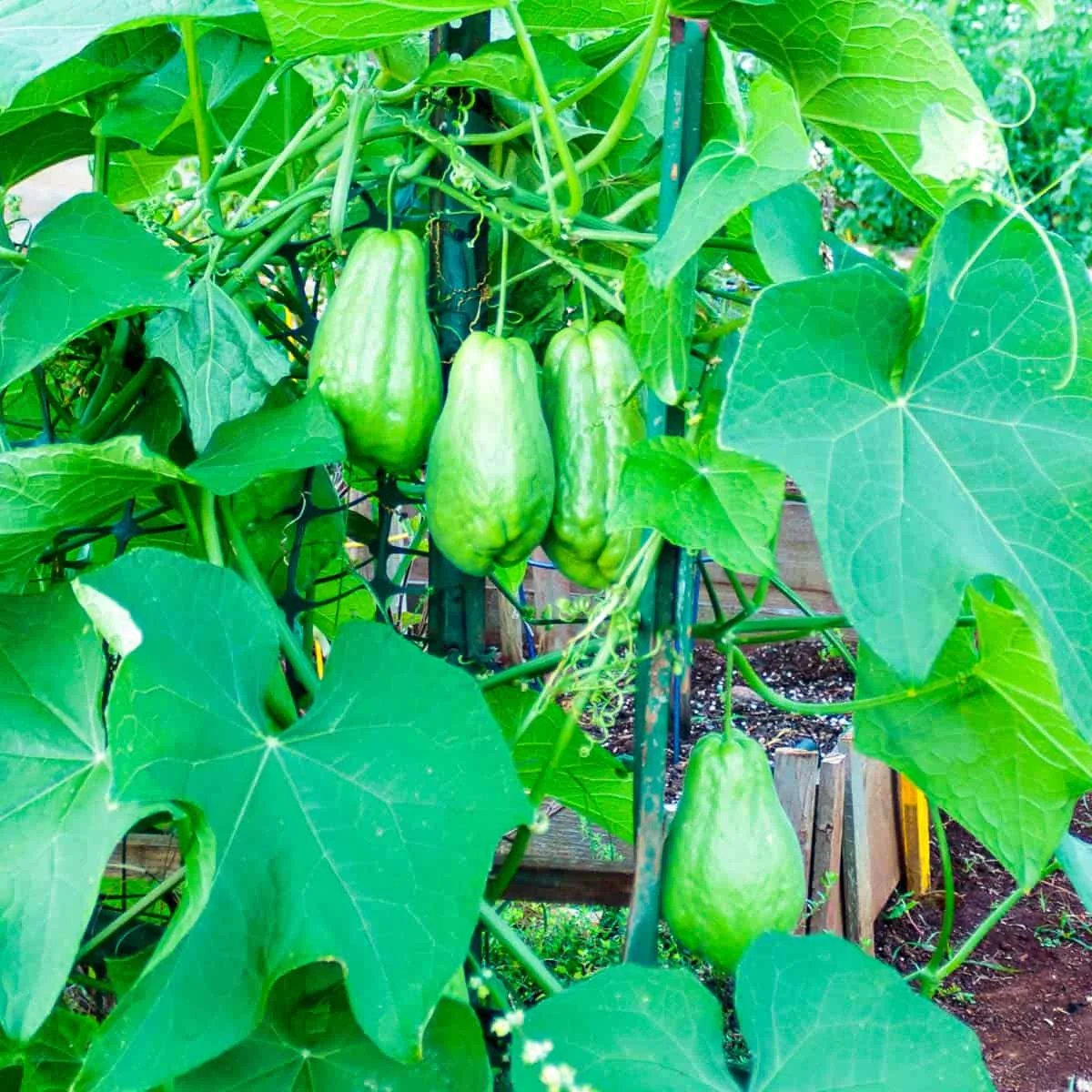
Chayote (*Sechium edule*) is a perennial climbing plant belonging to the gourd family, Cucurbitaceae. Originating from Mexico and Central America, it is widely cultivated in tropical and subtropical regions. The plant features heart-shaped leaves measuring 10–25 cm in width and tendrils on the stem, allowing it to climb structures up to 12 meters high. The fruit is typically pear-shaped, ranging from 10 to 25 cm in length, with a thin green skin and pale green to white flesh. Each fruit contains a single, large, flattened seed. The flesh has a mild taste, and its texture is described as a cross between a potato and a cucumber. Chayote is versatile in culinary applications, consumed both raw and cooked, and is a good source of vitamin C. Chayote thrives in full sun but can tolerate partial shade. It requires humus-rich, well-drained soils with a slightly acidic to neutral pH (4.5 to 6.5). The plant prefers regions with average temperatures of 13–21°C and annual precipitation of 1500–2000 mm. While it is not frost-tolerant, chayote can be grown as an annual in temperate regions. Chayote is typically propagated by planting the whole fruit, as the seed germinates within the fruit itself. Plant the mature fruit in well-drained soil with the broad end facing downwards, covering it lightly with soil. Ensure support structures are in place to accommodate the climbing vines. Fruits are ready for harvest when they reach about 10–15 cm in length and are still tender. Regular harvesting encourages continuous fruit production throughout the growing season.
Permaculture Functions
- Edible: pear-shaped fruits cook like summer squash -- while young shoots, tendrils, and tuberous roots enter regional dishes after verifying cultivar edibility and peeling fibrous skins.
- Mulcher: frost-killed vines collapse into heavy cucurbit residue for compost -- when managers slash tangled masses off trellis before mold coats every cranny of the arbor.
- Ground Cover: rambles horizontally across mulch until trellis lifts vines -- shading soil and blocking weeds along fence lines during the warm wet season growth surge.
- Wildlife Attractor: small green-white flowers draw bees and syrphid flies for hand-pollination mornings -- while ripe fruit draws raccoons unless picked when skin is still glossy firm.
Companion Planting
Also mentioned as companions:
- Corn
- Bean
- Squash
Not yet profiled in PermiePortal
- Potato
- Cucumber
Threats & Pressure