About
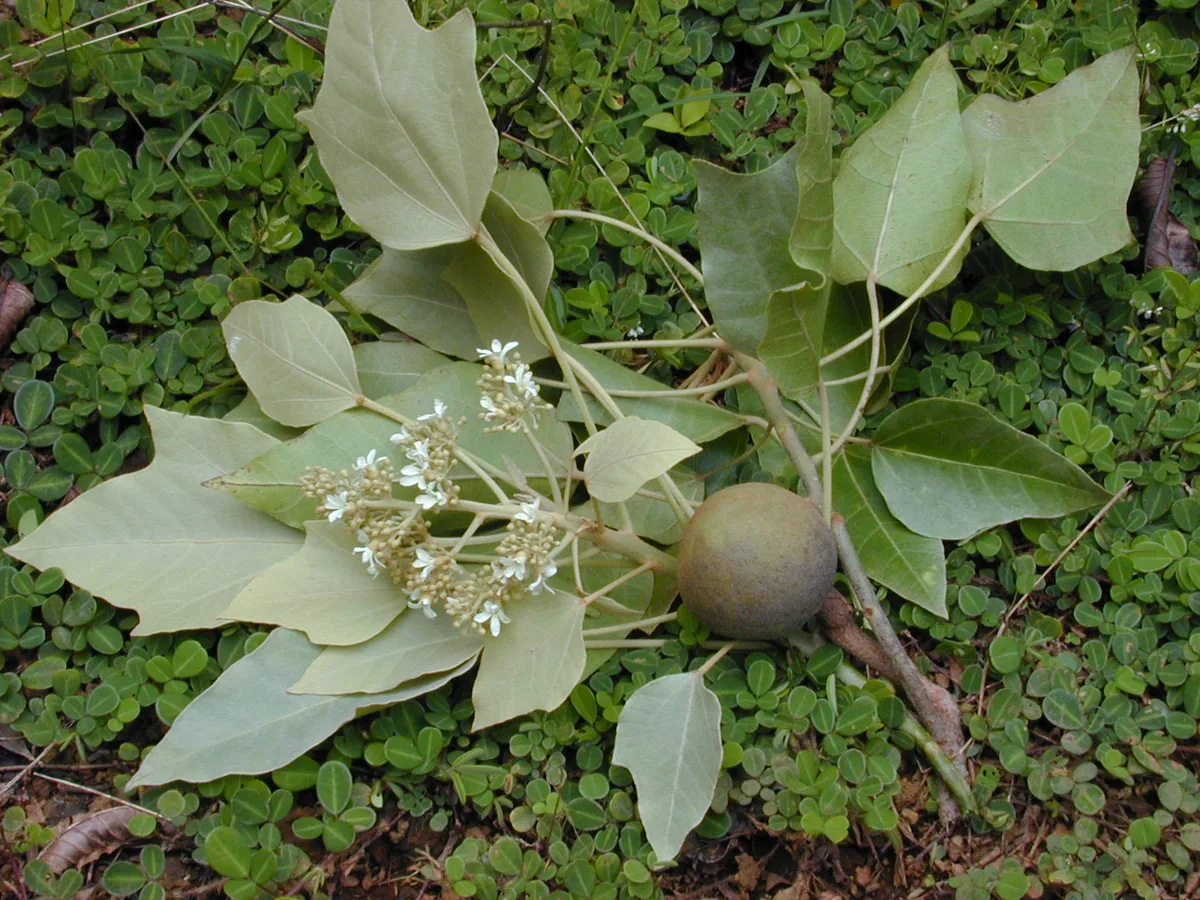
The candle nut tree (Aleurites moluccanus), known as kukui in Hawaiʻi, is a fast-growing tropical tree to about 15–25 m (50–80 feet) with large, alternate, three- to five-lobed leaves and clusters of small white flowers followed by round, very hard nuts rich in oil. It is native across the Pacific and Southeast Asia and naturalized in many subtropical/tropical landscapes. Full sun for strong structure and nut production once established. Prefers deep, fertile, well-drained soil with steady moisture in the warm season; tolerates brief drought when mature. In subtropical and tropical Americas it thrives in humid heat—give young trees mulch and wind protection during hurricanes prep (prune for strong scaffolding). Avoid standing water on roots. Seeds: Fresh nuts germinate best; plant on their side in warm, moist medium; seedlings appear in several weeks. Air-layering or cuttings: Used by enthusiasts for known cultivars; slower than seed. Collect fallen nuts when husks age; dry and crack carefully—raw nuts are toxic in quantity; traditional use involves roasting or processing for oil. Leaves and history carry medicinal lore; modern use should respect toxicity and local guidance.
Permaculture Functions
- Edible: kernels yield kukui oil and traditional foods only after roasting or pressing removes toxic lectins -- raw nuts are emetic and not trail snacks.
- Medicinal: leaf infusions and expressed oil appear in Pacific Island skin-care traditions -- where dosage and purity still require trained guidance, not casual self-experimentation.
- Mulcher: sheds very large leaves in seasonal flushes that can be raked into understory mulch to feed soil fauna -- if spiny debris is sorted from barefoot paths.
- Windbreaker: opens a wide tropical crown that slows trade winds -- across coastal lots so tender understory crops lose less moisture to constant gusts.
Threats & Pressure