About
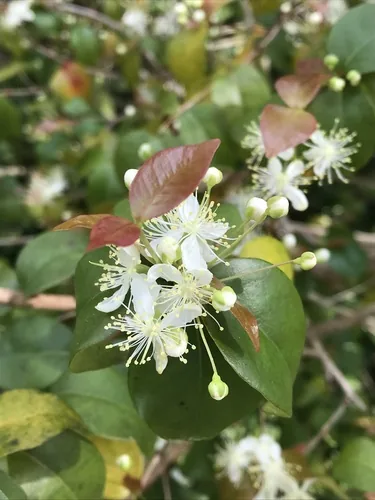
Surinam cherry is a myrtle relative with ribbed, lantern fruits that taste resinous-tropical — love it or pretend you never met it. In Florida it is a documented invasive in many counties, seeding into hammocks and disturbed ground. If you already have it, harvest hard and remove seedlings; if you are planting new, pick native alternatives unless you enjoy explaining yourself to land managers. Full sun, heat, and decent drainage make it fruit; freezes nip northern margins. Full sun for heaviest fruiting. Moderate water; drought-tolerant once established but fruits better with even moisture. Well-drained soil; tolerates sandy Florida yards. Seeds germinate readily — which is the ecological problem. Cuttings and air-layering for clones. Pick fully colored fruit; unripe berries are not a prank worth repeating. Overripe can taste better to some palates, animal-bait to others.
Permaculture Functions
- Edible: Eugenia uniflora ribbed scarlet to black fruit sweetens when fully blushed -- still check regional fly quarantines before marketing jam off the back steps.
- Wildlife Attractor: Frugivorous birds move seeds into preserves fast -- net home trees and remove volunteers from hammock edges on listed sites.
- Ornamental: Coppery new flushes on neat myrtle habit read designed even -- when the plant wants to be a small tree.
- Border Plant: Tight shearing plus thornless myrtles make living fence lines in frost-free lots -- if you accept weekly trim debt.
Companion Planting
- Planting near natural areas in invasion-prone regions
Threats & Pressure