About
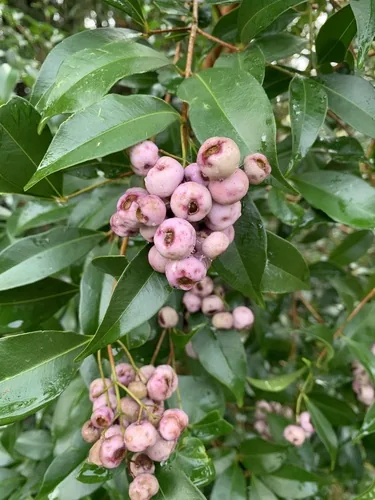
Syzygium smithii is a lilly pilly species from eastern Australia, commonly used for hedges and small-tree screens, with small glossy leaves, white fluffy flowers, and edible pink to purple fruit when fully ripe. Plants range from large shrubs to trees around 20–35 feet (6–10.5 m) depending on pruning and cultivar. It suits humid subtropical food forests where psyllid-resistant selections are chosen and myrtle rust policies are monitored. Full sun to bright partial shade; densest hedges in strong light with steady moisture. Rich, well-drained soils suit it; mulch to buffer roots in heat. Short drought once established shows as tip burn—irrigate during dry spells for fruit. Sow fresh seed; semi-hardwood cuttings for hedge lines. Shear hedges after flowering flushes; thin interiors periodically for airflow. Pick fruit when soft and fully colored—process into jams where tartness is managed. Peak loads track warm wet periods.
Permaculture Functions
- Edible: Syzygium smithii magenta leathery berries stew into high-pectin jams after you beat parrots and myrtle rust scouts to ripe clusters -- on clipped hedges.
- Wildlife Attractor: Cream brush flowers swarm with honeybees weeks before mango bloom -- while ripening fruit pulls noisy miners and lorikeets.
- Border Plant: Responds to tight shear into formal screens along subtropical walkways -- when interior canopy stays open for fungus prevention.
- Ornamental: Copper new growth snaps against glossy evergreen planes -- for designers labeling plants Acmena versus lilly pilly lore.
Companion Planting
- Psyllid pockmarks on susceptible clones—research resistant cultivars before miles of hedge
- Myrtle rust alerts—follow regional guidance and scouting routines
Threats & Pressure