About
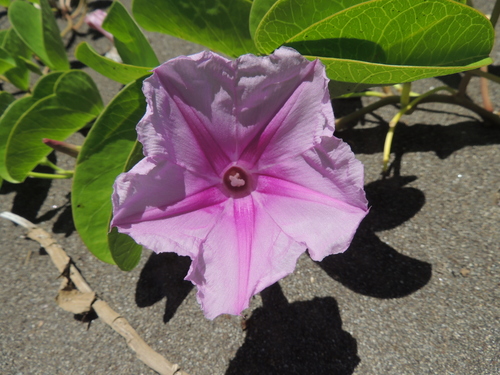
Railroad vine (Ipomoea pes-caprae) is a pantropical and warm-subtropical trailing morning glory famous for stabilizing dunes and beach roadsides across the Atlantic, Gulf, and Caribbean coasts. Succulent leaves are notched like a cloven hoof; pink-purple funnels open at dawn. It is a first-line defense against sand blowouts where turfgrass is both thirsty and absurd. ☀️💧 Sun and Water Requirements: - Full sun; shade makes leggy weak growth on sand. - Drought tolerant; salt spray and wind desiccation are normal working conditions. - Pure sand to sandy loam; excellent drainage mandatory—never pot without bottom holes. ✂️ Propagation: - Cuttings root quickly in damp sand if nights stay warm. - Seeds scarify gently; germinate in warm trays. - Transplant mats after storms only with local regulations respected—some dunes are protected. 🌾 Harvest / Best Use Timing: - Not a primary human food crop; focus on stabilization and pollinator value. - Trim runners encroaching on paths after peak bloom to reduce tripping hazards. - Replace sections killed by unusual cold snaps once soil warms in frost-free climates.
Permaculture Functions
- Erosion Control: Dense mats bind foredunes and road verges against wind shear.
- Ground Cover: Succulent stems root at nodes, knitting bare sand rapidly after disturbance.
- Wildlife Attractor: Flowers feed pollinators including bee species active at beach edges.
- Ornamental: Showy blooms and silver-green foliage suit xeric coastal landscapes.
Practitioner Notes
- It is not a houseplant—indoors it stretches for sun like a bad metaphor.
- Respect local coastal protection laws; “helping” dunes without permits is how fines happen.
- Cold snaps brown leaves fast; wait before declaring death—nodes often resprout from sand-warm roots.
Companion Planting
- New Zealand Ice Plant — finer succulent mat behind the front dune line with overlapping salt tolerance
- Sea Oxeye Daisy — perennial composite for slightly more protected back-dune moisture
- Sea Rocket — annual brassy filler that reseeds in upper beach zones
Pest Pressure