About
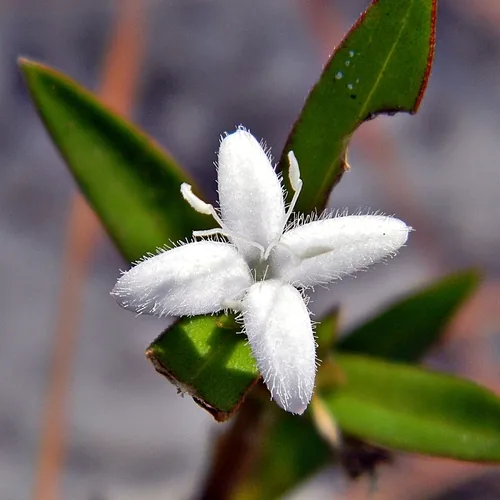
Virginia buttonweed (Diodia virginiana) is a mat-forming perennial herb of moist lawns, pond margins, and low fields across the southeastern United States and into the Caribbean where hardy. Opposite leaves and tiny white starry flowers produce button-like seed clusters; stems root at nodes and spread through turf. It is primarily documented as a challenging lawn weed, yet in restoration contexts it stabilizes wet margins and feeds small pollinators. Full sun to light shade; densest mats where irrigation or rainfall keeps soil consistently moist. Tolerates brief flooding at edges; struggles on dry xeric berms without supplemental water. Compacted turf with frequent shallow watering often favors it—deeper, less frequent irrigation shifts competition. Stem fragments and rooted nodes establish new patches; cultivation spreads it unless tools are cleaned. For containment in turf, raise mower height, reduce compaction, and improve drainage. Seed also germinates in warm wet soils. Not a food crop. If managing in restoration plugs, transplant during cool wet weather and expect rapid spread. For lawn conversion projects, solarize or smother patches before seed drop in late season.
Permaculture Functions
- Ground Cover: Diodia virginiana mats hug moist lawns and pond lips with opposite leaves and white star flowers -- tolerates mower traffic poorly, so it reads as weed unless you name the niche.
- Wildlife Attractor: Tiny blooms feed small bees and syrphids in humid southeastern summers -- best viewed as wetland pollinator filler, not showy meadow architecture.
- Erosion Control: Stolons root at every node along saturated sand -- useful for stabilizing ditch banks where turfgrass rots; spreads aggressively if irrigation stays shallow and frequent.
Companion Planting
Also mentioned as companions:
- St. Augustinegrass
- Centipedegrass
Not yet profiled in PermiePortal
- Turf invasion — spreads via lawn mowers and wet years; address drainage before chemical fantasies
- Misidentification — verify opposite leaves and habitat; other “buttonweeds” differ in family and management
Threats & Pressure