About
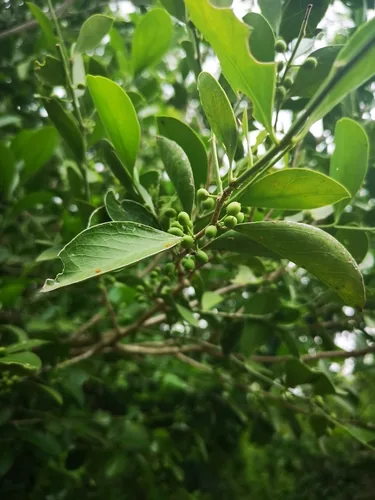
Florida boxwood (Schaefferia frutescens) is a slow-growing evergreen shrub of coastal hammocks, shell mounds, and limestone margins in southern peninsular areas and the Caribbean, bearing small leathery leaves, inconspicuous flowers, and bird-dispersed fruits on female plants. It offers a native alternative aesthetic to imported Buxus hedges—without pretending identical shearing tolerance. Use it in salt-touched landscapes, dune scrub interiors, and food forest edges where you want fine texture and low stature that does not pretend to be turf. Full sun to partial shade; densest growth in bright light with adequate moisture. Tolerates brackish winds and lean, well-drained, alkaline soils derived from shell; poor fit for heavy wet clay inland. Drought tolerance increases with establishment but young plants need even watering. Protect from hard freezes below roughly 25°F (-4°C) on exposed sites. Seeds cleaned and sown warm may germinate irregularly; patience is standard equipment. Semi-hardwood cuttings under mist can clone known female fruiting plants if you want berries. Landscape maintenance is the main yield—light tip pruning after warm-season growth preserves natural form. Collect local seed only where legal and ethical for restoration projects.
Permaculture Functions
- Border Plant: Schaefferia frutescens fine celastraceous leaves read like native boxwood on shell-rock berms -- where imported Buxus declines from salt and high pH on Keys lots you refuse to lime wash into failure.
- Wildlife Attractor: Dioecious female clones yield bird-dispersed fruits -- while dense twigs shelter anoles at hammock interiors in zone 10-11 rows where gumbo limbo already proves dappled coastal overstory works overhead.
- Ornamental: Slow evergreen shrub suits dappled coastal food-forest edges -- where you need under-four-foot architecture without neon annual filler along limestone paths you sweep of hurricane wrack each autumn.
- Erosion Control: Fibrous roots knit limestone rubble on coastal berms against sheetflow from summer king tides brushing upland mulch lines -- where freshwater lens stays thin above salt wedge intrusion.
Companion Planting
Also mentioned as companions:
- Gumbo Limbo
Not yet profiled in PermiePortal
- Hard freezes and inland radiative cold pockets—marginally hardy plants brown at tips after cold snaps
Threats & Pressure