About
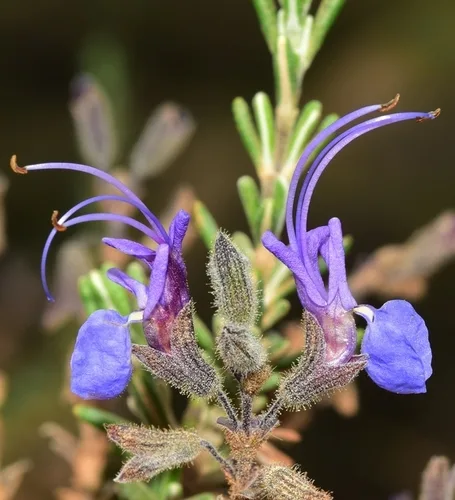
Creeping rosemary is the same resinous kitchen herb as upright types, except it crawls along slopes and walls like it is late for something. Tiny blue flowers pull pollinators; stems root where they touch soil if you are not paying attention. Often survives open ground in 9a/b with drainage; cold snaps test microclimate—berm, gravel mulch, south face. Wet cool spells invite root rots. Full sun mandatory for density and flavor oils; shade makes leggy sad sprigs. Lean, well-drained soil; drought-tolerant once established—deep soak, then dry. Semi-hardwood cuttings in warm weather; strip lower leaves, use gritty mix. Layer stems pinned to soil until roots hold. Clip sprigs year-round in mild climates; flavor peaks on new growth before heavy bloom if you are picky.
Permaculture Functions
- Edible: Salvia rosmarinus 'Prostratus' sprigs carry the same resinous kitchen oils as upright rosemary -- clip young growth before heavy bloom for strongest flavor on walls and berms.
- Medicinal: Volatile oils in the leaves echo traditional rosemary uses for circulation and digestion -- research drug interactions before therapeutic doses.
- Pollinator: Tiny blue flowers feed small bees when you allow bloom -- on prostrate stems spilling over edges.
- Border Plant: Stems crawl over retaining blocks and terrace lips, rooting at nodes -- to knit gravelly slopes faster than upright clones.
- Pest Management: Strong camphor-resin scent can mask host cues for some chewing insects along paths -- pair with scouting, not superstition.
Companion Planting
Threats & Pressure