About
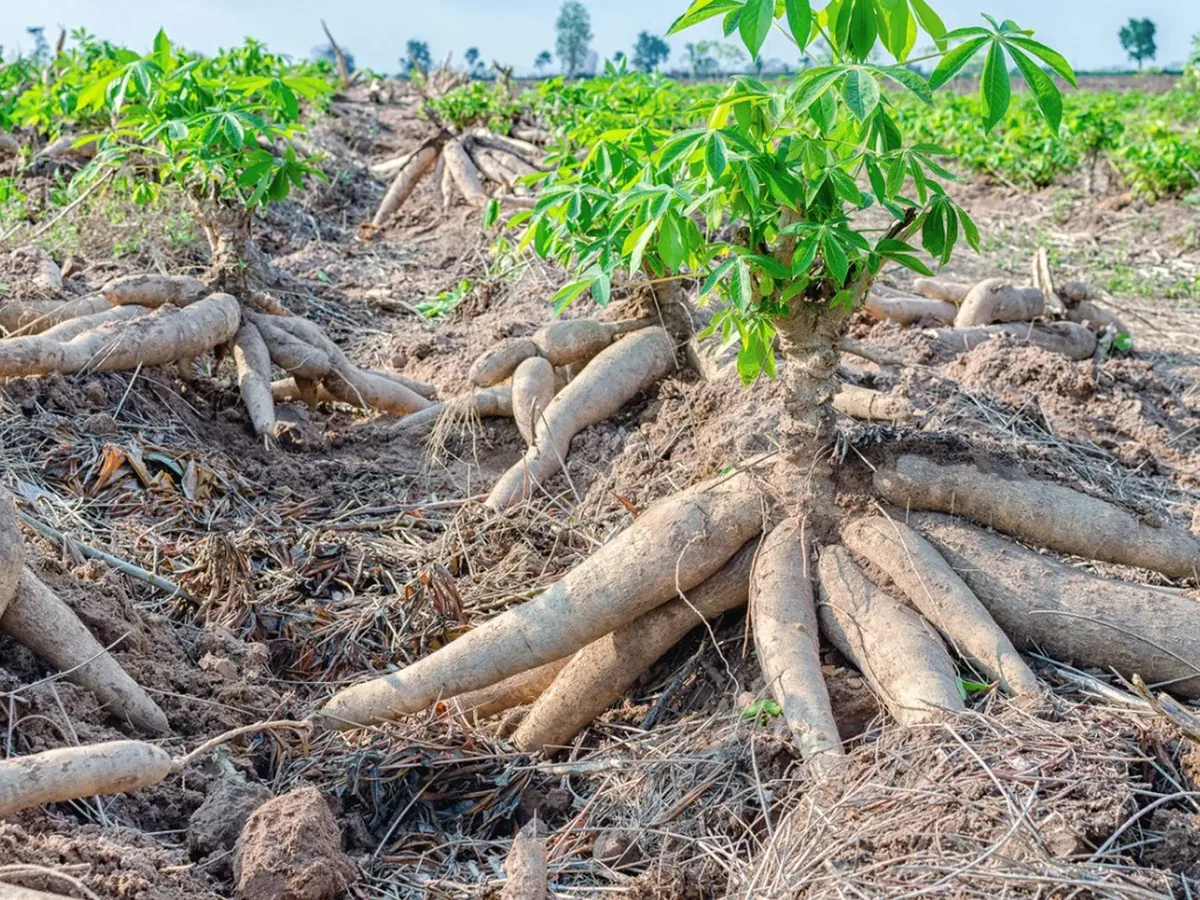
Cassava is a shrubby perennial that can reach heights of 6 to 8 feet (1.8 to 2.4 meters), characterized by smooth, erect stems and large, palmate leaves with dark green coloration and reddish veins. The plant produces starchy, tuberous roots that are a staple food in many tropical regions. While primarily grown for its edible roots, cassava also offers ornamental value due to its lush foliage. Sun: Prefers full sun but can tolerate partial shade. Water: Requires well-drained soil and is drought-tolerant once established; however, consistent moisture promotes optimal growth. Stem Cuttings: Plant 2- to 3-inch (5- to 7.5-centimeter) sections of mature stems directly into the soil during the warm season. Roots: Typically harvested 8 to 12 months after planting, when they reach a desirable size. Leaves: Can be harvested periodically for use as a leafy green, ensuring some foliage remains for plant health.
Permaculture Functions
- Edible: tuberous roots boil into staple starches and tapioca after cyanogenic glucoside processing -- while young leaves cook as protein greens only where varieties and boil times are verified safe.
- Animal Fodder: chipped roots and wilted leaves enter pig and poultry rations on small farms after proper drying or fermenting steps that drop cyanide below toxic thresholds -- for each species.
- Erosion Control: fibrous root mats knit sloping tropical fields within months of planting -- slowing sheet erosion on red clays when rows follow contour and residues stay on site.
- Biofuel: high-starch roots feed ethanol fermenters and biogas digesters in tropical pilot plants -- where washwater acidity is managed so neighboring streams are not sacrificed for yield.
Companion Planting
Also mentioned as companions:
- Corn
- Bean
- Peanut
Not yet profiled in PermiePortal
- Sweet Potato
Threats & Pressure