About
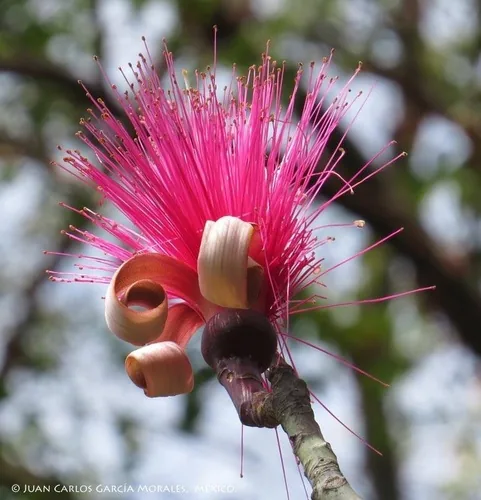
Shaving brush tree (Pseudobombax ellipticum) is a dry-season deciduous tropical tree famous for large pink flowers with hundreds of stamens that resemble barber brushes, opening on leafless branches after winter-thin canopies in seasonal climates. Trees reach 20–40 feet (6–12 m), often with a broad spreading crown and smooth pale bark. It is a spectacle plant for humid tropical and subtropical gardens where winter cool triggers leaf drop and spring heat triggers bloom. Full sun for heaviest flowering; young trees accept partial shade. Well-drained, moderately fertile soils suit it; drought-tolerant during leafless periods once established. Water during leaf expansion and flowering to maximize bloom size; avoid waterlogging. Sow fresh seed in warm, humid conditions. Air-layer known bloomers for predictable flower form. Prune for clearance under wide branches; avoid topping. Primarily ornamental—flowers are short-lived but unforgettable. Growth and bloom track wet-dry seasonality rather than temperate months. Rake fallen petals if paths must stay pristine.
Permaculture Functions
- Ornamental: Pseudobombax ellipticum bare-branch blooms erupt like pink shaving brushes -- days-long spectacle beats months of bland hedge bloom for designers who tolerate petal litter.
- Wildlife Attractor: Hundreds of exserted stamens shed pollen onto large bees during the explosive dry-season bloom pulse -- when few other canopy trees flower.
- Shade Provider: Wide parasol foliage returns during monsoon rains to shelter vanilla vines, cacao, and understory ginger -- until the next deciduous shed.
- Border Plant: Smooth pale trunk lines read like living sculpture at driveway corners -- where razor wire aesthetics fail.
Companion Planting
- Frost — young growth damages near 30°F (-1°C); protect on marginal subtropical sites
- Brief leafless window — plan sight lines before planting in front of picture windows
Threats & Pressure