About
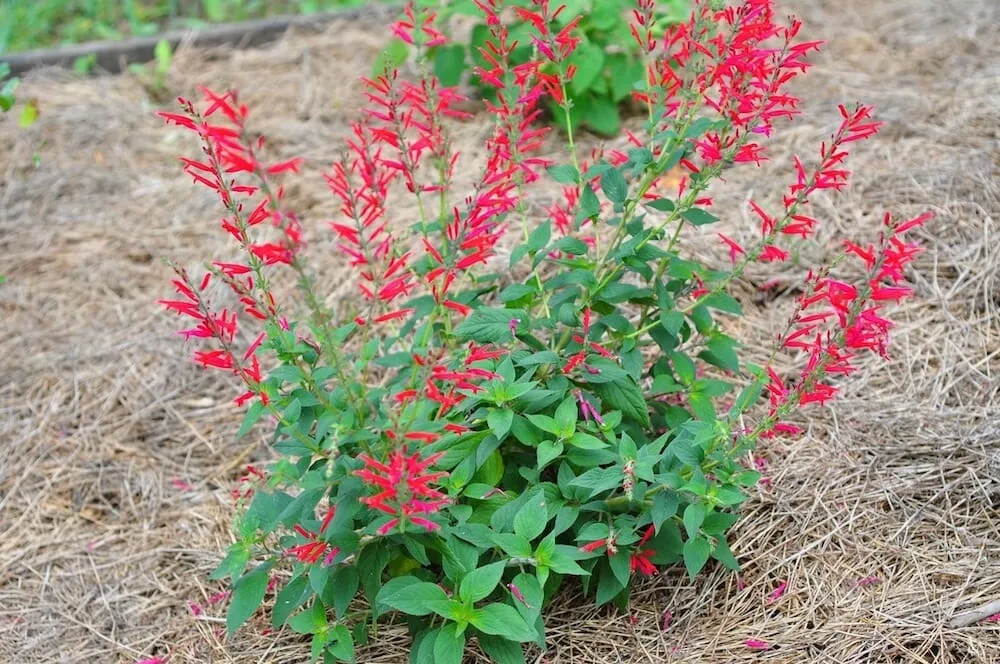
Pineapple Sage (Salvia elegans) is a perennial herb known for its vibrant red tubular flowers and fragrant foliage that smells like pineapple. It grows as a bushy shrub reaching 1-1.5 meters (3-5 feet) tall and spreads moderately. The plant thrives in warm climates and is commonly grown for its ornamental value, culinary use, and attractiveness to pollinators such as hummingbirds and bees. Prefers full sun but tolerates partial shade. Requires well-drained soil, ideally sandy or loamy. Moderate drought tolerance; water regularly but allow soil to dry between watering. Seed: Best started indoors in early spring and transplanted after frost. Cuttings: Softwood cuttings root easily in water or moist soil. Division: Can be divided from mature plants to propagate new growth. Leaves can be harvested year-round in warm climates. Flowers bloom in late summer to fall and can be used fresh or dried.
Permaculture Functions
- Edible: Salvia elegans leaves and scarlet tubular flowers steep into pineapple-scented teas, syrups, and dessert garnishes -- flavor is milder before frost; hummingbirds argue with you if you strip every bloom.
- Medicinal: Aerial parts appear in Mexican folk stomach teas and anxiety-smell protocols tied to volatile monoterpenes -- treat as gentle food medicine, not concentrated pharmaceutical swaps, especially around pregnancy without guidance.
- Pollinator: Late-fall nectar tube geometry matches migrating ruby-throated hummingbirds and long-tongued bumble queens when few other plants still drip sugar -- plant in masses so birds find the bar worth the fuel stop.
- Wildlife Attractor: Dense branching shelters mantids and crab spiders that hunt leafhopper nymphs; seed heads feed finches if you delay hedge shearing until spring warm -- trade tidy for trophic layers honestly.
- Mulcher: Frost-killed tops collapse into aromatic mulch that warms compost piles -- chop stems fine because hollow salvia stalks otherwise bridge air pockets that dry worm beds.
- Dynamic Accumulator: Shallow fibrous roots plus deep tap remnants mine potassium into leaf ash after hard frost -- sprinkle chipped residue under potassium-hungry bananas with pH monitoring on acid sands.
- Erosion Control: Fibrous root mats hold mulch on sloped herb spirals and terrace berms where irrigation runs fast -- pair with stone edging so downhill soil does not wash past sage skirts in monsoon bursts.
- Border Plant: 1–1.5 m upright bushes edge patios and paths with pineapple perfume whenever leaves bruise -- shear spring outline after frost date because wood does not reliably resprout from old brown nodes.
Threats & Pressure