About
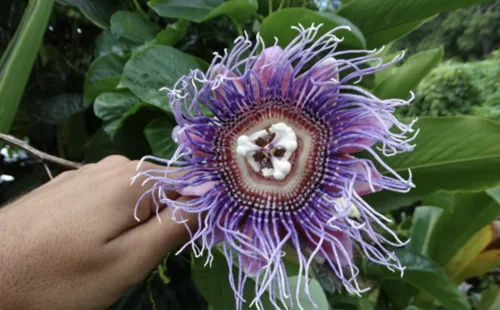
Giant granadilla is the passion vine that skipped leg day and never looked back: huge leaves, big green fruit, mild aromatic pulp. It needs serious trellising—think pergola engineered for weight, not a flimsy tomato cage having an existential crisis. subtropical and tropical Americas is marginal for reliable fruiting; coastal 10a microclimates with frost plans are the honest conversation. Full sun for flowering and fruit; partial shade tolerated in peak heat if humidity stays reasonable. Rich, organic, well-drained soil; steady moisture during vine push and fruit swell. Cuttings: preferred for clones; semi-hardwood in warm, humid conditions. Seeds possible but variable; slower than cuttings for production-minded growers. Fruit size and skin color vary by clone; harvest when skin begins to yield slightly and aroma develops—patience beats premature pick pucker.
Permaculture Functions
- Edible: Passiflora quadrangularis oblong green fruit yields mild aromatic pulp for nectars once skin yields to thumb and lenticels swell -- rind cooks into regional Caribbean stews while seeds stay crunchy unlike sweet dessert passionfruit selections on market shelves.
- Wildlife Attractor: Passiflora chemistry supports heliconius and Agraulis vanillae larvae -- where pesticide drift stays absent on pergolas engineered for twenty-pound fruit loads instead of tomato cages having existential crises each summer storm.
- Shade Provider: Hand-size glossy leaves laminate pergola tops for understory coffee in humid zone 10-11 yards after vines graft onto resilient rootstocks -- for fusarium resilience on posts you set in concrete not fence picket optimism alone.
- Ornamental: Square-winged stems and dinner-plate leaves sell jungle aesthetic on engineered arbors steel posts carry -- while mild winters on coastal microclimates still demand frost plans you already wrote after last polar blip browned tips.
Companion Planting
Also mentioned as companions:
- Bean
Not yet profiled in PermiePortal
- Undersized trellis or fence panels
- Unprotected young vines in open frost pockets