About
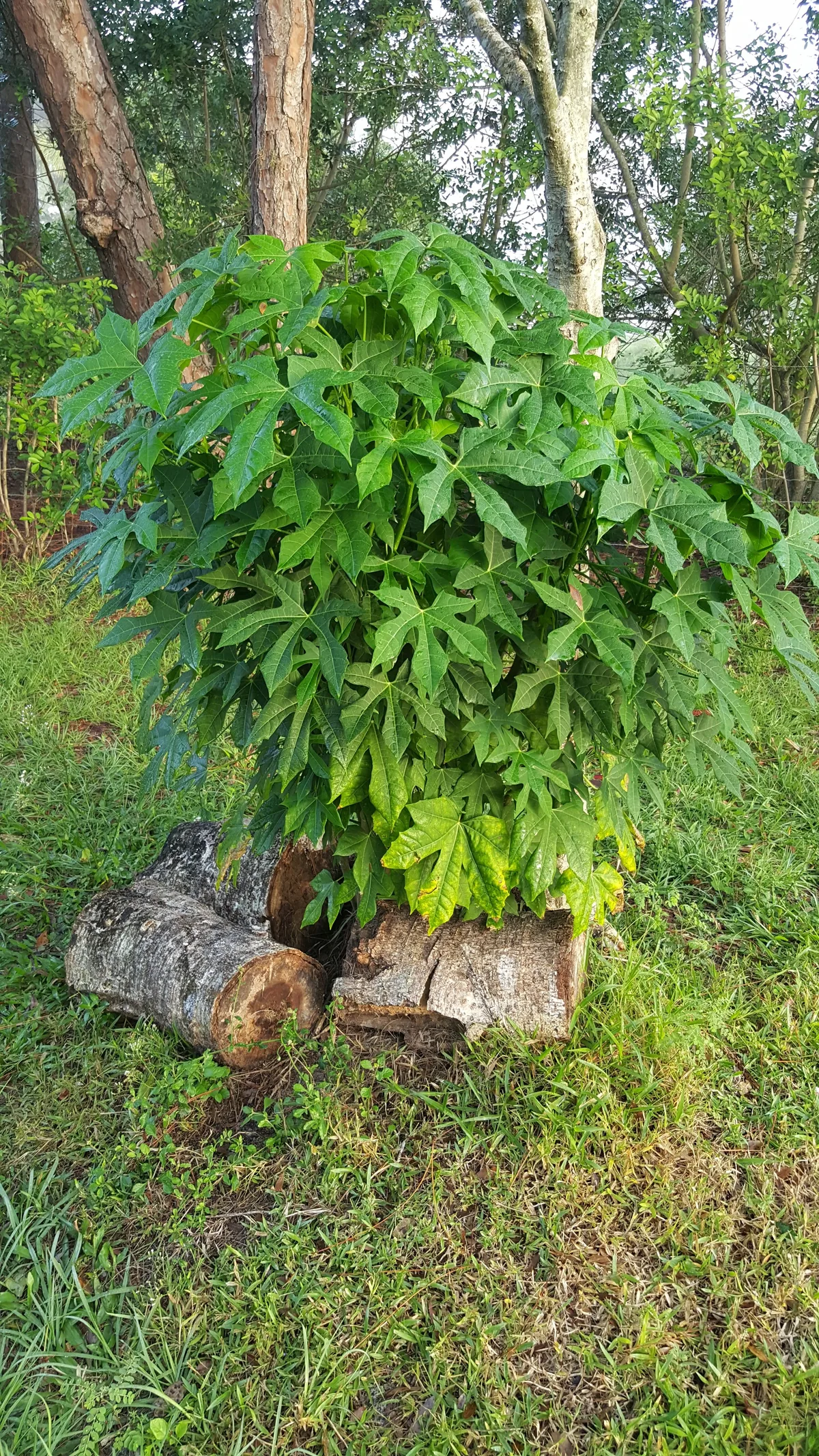
Chaya (*Cnidoscolus aconitifolius*), commonly known as Tree Spinach, is a fast-growing, drought-tolerant perennial shrub native to Mexico and Central America. It typically reaches heights of 3–6 meters (10–20 feet) but is often pruned to about 2 meters (6 feet) for easier leaf harvest. The plant features large, dark green, palmate leaves resembling those of cassava or castor beans. Small, white flowers attract pollinators such as butterflies and bees. Notably, the leaves must be cooked before consumption to neutralize naturally occurring toxins. Chaya thrives in full sun to partial shade and is adaptable to various soil types, including both moist and dry conditions. Once established, it exhibits considerable drought tolerance. Propagation is primarily achieved through woody stem cuttings approximately 15–30 centimeters (6–12 inches) long, as the plant rarely produces viable seeds. Early growth is slow due to gradual root development; thus, leaf harvesting is recommended starting in the second year. Once established, Chaya leaves can be harvested year-round. It's advisable to pick young leaves and tender stem tips, ensuring not to remove more than 50% of the foliage at any time to maintain healthy growth.
Permaculture Functions
- Edible: Provides a nutritious leafy green rich in protein, vitamins A and C, calcium, and iron. Cooking the leaves is essential -- to eliminate toxic compounds.
- Medicinal: Leaves and stems contain bioactive compounds traditionally used for digestion, blood sugar regulation, and anti-inflammatory support -- research first; raw leaves require cooking to neutralize toxic compounds.
- Wildlife Attractor: Small white flowers feed bees and beneficial insects through warm months -- extended bloom provides nectar access when many neighboring herbs have finished.
- Mulcher: Rapid growth allows for regular pruning -- supplying organic matter for mulching and soil enrichment.
- Dynamic Accumulator: Accumulates nutrients, particularly nitrogen -- improving soil fertility.
- Erosion Control: Its extensive root system stabilizes soil -- reducing erosion.
- Animal Fodder: Cooked leaves can be used as feed for livestock -- offering a protein-rich supplement.
Companion Planting
Threats & Pressure