About
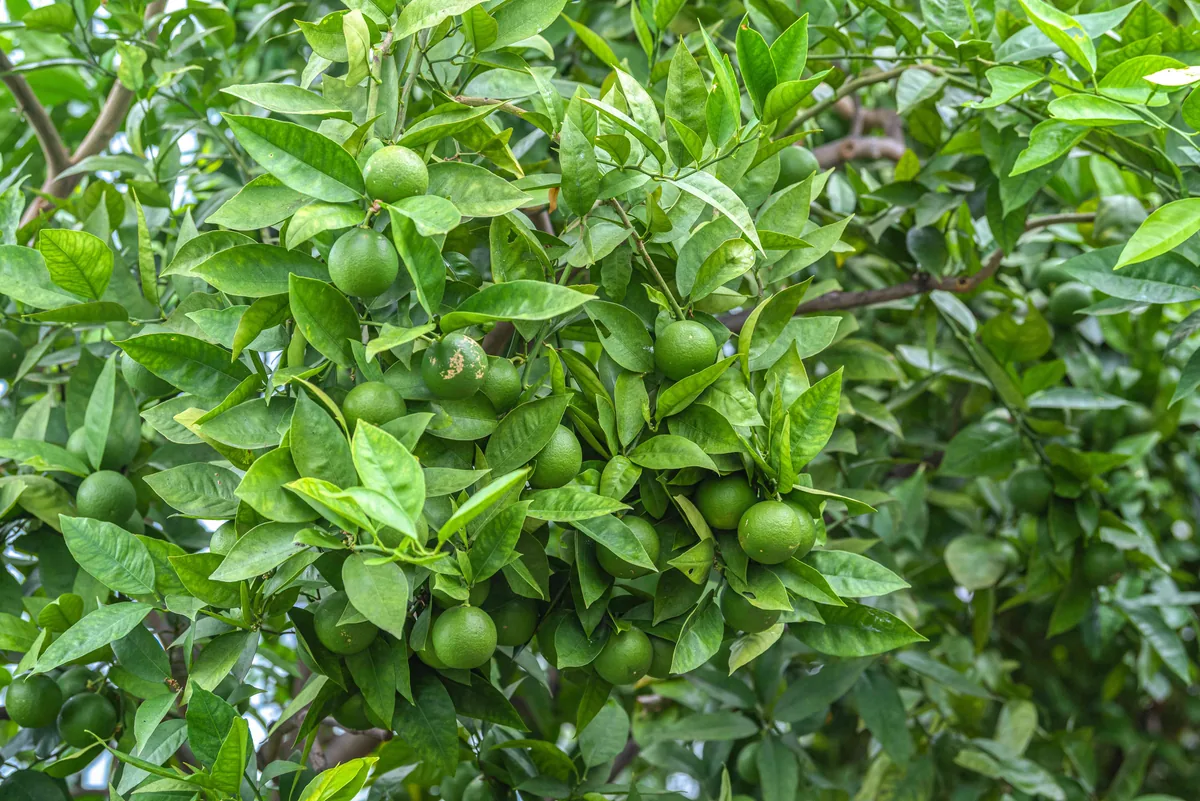
The Lime Tree is a small, evergreen tree reaching heights of 4.5 to 6 meters (15 to 20 feet). It has glossy, dark green leaves and bears fragrant white flowers, leading to small, green to yellowish-green fruit known for their tart flavor. Limes are rich in vitamin C and are utilized in various culinary and medicinal applications. The tree thrives in well-drained, slightly acidic soils and requires full sun exposure. Lime Trees require full sun, receiving at least 6 to 8 hours of direct sunlight daily. They prefer consistent moisture but are sensitive to waterlogged conditions. Regular watering is essential, especially during dry periods, to maintain soil moisture without oversaturation. Propagation is commonly achieved through grafting onto compatible rootstocks to ensure desired fruit characteristics and disease resistance. Seed propagation is possible but may not produce true-to-type plants and can result in variable fruit quality. Limes can be harvested when they have developed full coloration and are slightly soft to the touch. Depending on the variety and climate, this can occur multiple times a year, with some trees bearing fruit year-round.
Permaculture Functions
- Edible: Citrus aurantiifolia bears thin-skinned, seedy fruit with piercing acid for ceviche, cordials, and marmalade -- zest the peel before juicing because aromatics live in the colored flavedo, not the pale pith.
- Medicinal: Juice delivers vitamin C for dietary support; peel oils enter folk tonics for digestion -- ask a pharmacist about drug interactions if you already rely on medications affected by citrus enzymes.
- Pollinator: White, intensely fragrant flowers load nectar during the rutaceous bloom wave -- avoid spraying insecticides during petal fall if you want fruit on container trees near patios.
- Wildlife Attractor: Split fruit and peeling bark harbor ants and fruit flies that feed mockingbirds -- pick drops promptly if pavement cleanliness matters more than opportunistic insectivores.
- Border Plant: Thorny, compact habit suits espalier along walls or as a defined courtyard tree -- keep mower rings clear so collar rot does not argue with your hedge geometry.
Companion Planting
Also mentioned as companions:
- Clover
- Marigold
- Basil
- Mint
- Thyme
Not yet profiled in PermiePortal
- Walnut
Threats & Pressure