About
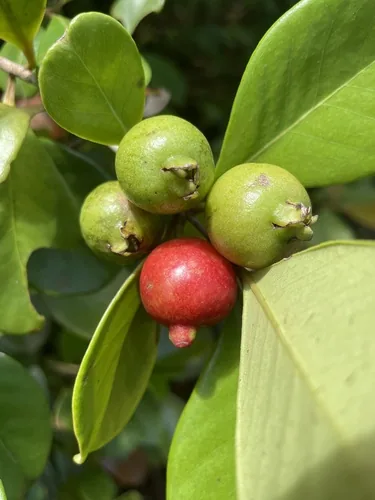
Strawberry guava is a small myrtle with bite-sized tart-sweet fruit and a résumé that includes “Florida invasive in many areas.” Birds move seeds into hammocks and preserves while you are not looking. If you already have it, manage fruit load and seedlings; if you are choosing new plants, native alternatives often age better with your conscience. subtropical and tropical Americas is near the northern edge—winter damage increases inland. Full sun to partial shade; more sun usually means more fruit. Tolerates many soils if drained; drought-tolerant once established—do not confuse toughness with permission to plant irresponsibly. Seeds: bird-dispersed in the wild—controlled pots if you must experiment. Cuttings and air-layering used for hedges; understand local regulations first. Pick dark red fruit slightly soft; yellow forms exist—taste before batch processing.
Permaculture Functions
- Edible: Psidium cattleyanum cherry-sized maroon fruits taste strawberry-guava tart straight off the hedge -- jelly rewards patience where fruit flies stay managed.
- Wildlife Attractor: Fragrant white flowers pull bees while fruit feeds birds that spread seeds into conservation land -- site only where regional biologists accept the invasion calculus.
- Windbreaker: Dense myrtle foliage trims coastal trades along frost-free citrus berms -- when rows stay clipped as tall shrubs.
- Border Plant: Thornless twigs shear into formal maritime hedges only -- if weekly scouting removes seedlings beyond the fence.
Companion Planting
- Planting near natural areas sensitive to invasion
- Ignoring local conservation guidance on removal versus management
Threats & Pressure