About
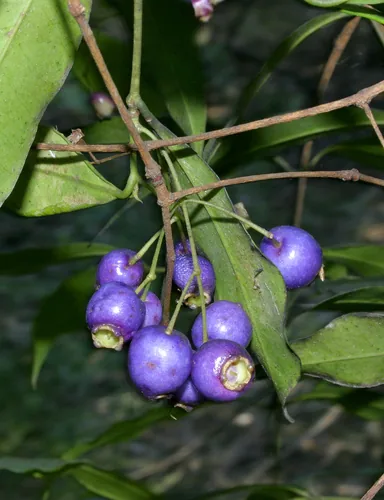
Blue tongue (Syzygium oleosum) is an Australian rainforest margin tree in the myrtle family, grown for aromatic foliage, cream flowers, and dark blue to purple edible fruit that stains mouths the common name promises. It typically reaches 20–40 feet (6–12 m) in cultivation with a dense crown and flaky bark on older trunks. In humid subtropical to tropical plantings it works as a hedge tree, wind-sift screen, and bird-feeding shrub that doubles as a backyard snack if fruit quality matches your selected clone. Full sun to partial shade; young plants establish faster with afternoon shade in hot districts. Prefers rich, moist, well-drained soils with steady organic mulch; tolerates short dry spells once rooted but fruits better with even moisture through flowering. Protect from hard frost; marginal sites need wind shelter and attentive establishment watering. Sow fresh seed soon after cleaning; viability fades if allowed to dry excessively. Semi-hardwood cuttings under humidity root during warm months. Select named hedge types if you need predictable height and fruiting. Pick fruit when deep blue-purple, slightly soft, and aromatic—flavor varies by tree. Use fresh, in jams, or fermented; seeds are small but present. Net portions you need for humans if local birds treat the crop as municipal service.
Permaculture Functions
- Edible: Syzygium oleosum fruits stain fingers purple-blue when soft -- giving tart forest cherry flavor for fresh bowls or quick jam if seeds do not bother you.
- Wildlife Attractor: Cream myrtle flowers feed honeybees and small flies -- ripe berries draw currawongs and fruit pigeons in Australian plantings and similar frugivores where you trial the tree.
- Ornamental: Flaky bark and glossy evergreen leaves read as a formal hedge from the street -- while inner branches still fruit if you thin for light.
- Border Plant: Accepts repeated shearing in frost-free climates -- so you can hold a 2 m screen along property lines without bamboo rhizome drama.
- Shade Provider: Rounded 6–12 m crowns cast humid shade under itself for understory gingers -- once roots are deep and mulch stays steady.
Companion Planting
- Myrtle rust regions — check current disease pressure before importing nursery stock across borders
Threats & Pressure