About
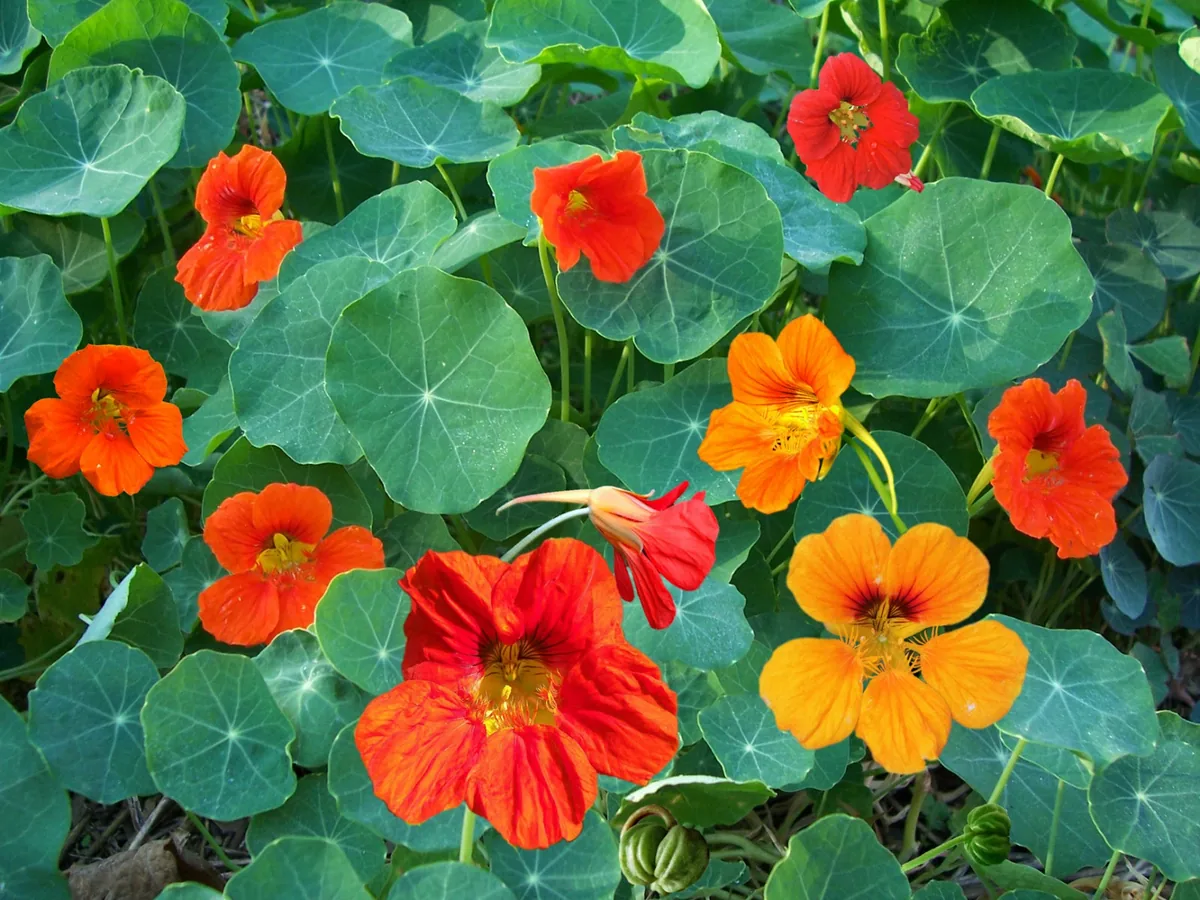
Nasturtium (Tropaeolum majus) is a fast-growing, low-maintenance flowering plant known for its bright orange, red, or yellow edible flowers and round, peppery leaves. It is often used as a companion plant due to its ability to repel pests and attract beneficial insects. The plant thrives in poor soil conditions, making it an excellent choice for ground cover in challenging areas. Prefers full sun but tolerates partial shade. Requires moderate watering but is drought-tolerant once established. Thrives in well-drained, slightly sandy soil with low fertility. Seeds: Easily grown from seed; best sown directly in the garden. Cuttings: Can be propagated from stem cuttings but less common. Leaves and flowers can be harvested once the plant is mature, typically within 4-6 weeks of planting. Seeds can be collected for pickling or propagation after the flowers fade.
Permaculture Functions
- Edible: Peppery leaves and whole orange flowers dress summer plates -- green seed pods pickle into poor-person’s capers if you harvest before seeds harden inside.
- Medicinal: Glucotropaeolin family chemistry gives the bite -- traditional use for minor URI comfort is kitchen-scale; heavy medicinal dosing needs pregnancy and kidney filters checked like any mustard-oil plant.
- Pollinator: Long-spurred nectar tube fits hummingbirds in trailing types -- bush types feed bumblebees on cool mornings when soil is still lean on purpose.
- Wildlife Attractor: Aphid colonies on nasturtium leaves concentrate protein for lady beetle larvae -- while keeping pressure off young beans upwind when you plant sacrificial patches at row ends.
- Pest Management: Whiteflies stack on yellow flowers first -- scout there before you assume brassicas are the only host in the bed.
- Border Plant: Trailing types spill over raised-bed rims with color that hides splashed soil -- on picket-fence vegetable gardens.
- Ground Cover: Low rosettes fill dry corners under eaves where turf dies -- thrives in poor soil; do not pour high-nitrogen feed or you get leaves, no flowers.
Field Observations
- No field observations yet
Companion Planting
Threats & Pressure