About
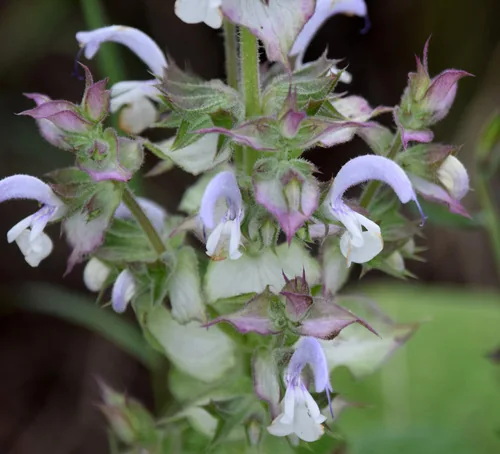
Clary sage is the biennial mint-relative with big fuzzy leaves and showy pink-white flower towers that smell like someone mixed tea with perfume. Distillation crowd loves it; tidy lawn crowd does not. Often grown as a cool-season biennial—summer heat can make it ratty unless given afternoon shade and airflow. Sun and water: Full sun in cool climates; part afternoon shade in hot ones. Well-drained, average fertility; drought-tolerant once established but looks richer with occasional deep water. Seeds sown in fall or early spring; barely cover seed; thinning prevents mildew parties. Snip tender Clary Sage growth in cool mornings for best texture -- heat-stressed leaves taste like their day job. Flowers at full color for peak volatiles; seeds when pods rattle but before they self-sow across paths. Dry herbs in thin layers; deep piles steam themselves into compost.
Permaculture Functions
- Medicinal: Linalool-rich bracts and spikes yield essential oil for muscatel bitters, eyewashes, and menstrual-support formulas -- in trained European herbal practice.
- Ornamental: Fuzzy basal rosettes rocket into pastel pink-white towers -- that give cottage borders vertical drama in the second-year bloom window.
- Wildlife Attractor: Tall verticillasters feed long-tongued bees and bumblebees after spring bulbs finish but -- before autumn asters open.
- Edible: Bracts flavor old wine-cup recipes and vermouth trials -- treat as accent flavoring, not bulk salad, because thujone-type chemistry deserves respect.
Companion Planting
Threats & Pressure