About
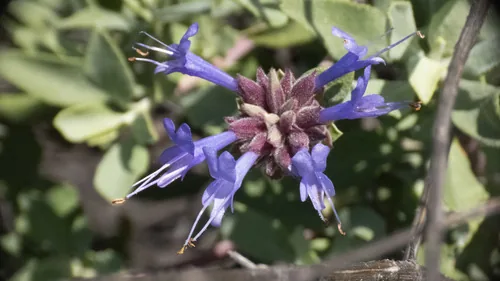
Cleveland sage is a gray-leafed California chaparral type with electric blue flowers that make honey bees look smug. Intensely aromatic—think resin plus mint plus “do not shove your face in without consent.” In subtropical and tropical Americas it can work in raised, fast-draining beds; summer humidity plus wet feet is how you turn a shrub into compost tuition. Full sun for compact form and heavy bloom. Sharp drainage essential; drought-tolerant once established—deep soak, then let it dry. Cuttings: semi-hardwood in warm weather under light mist or humidity dome. Seeds possible but variable; named hybrids are usually cloned. Snip flowering stems for bundles and pollinator strips; heavy spring cutback shapes woody bases.
Permaculture Functions
- Pollinator: Spikes of intense blue-violet flowers hit peak nectar right when coastal California chaparral wakes -- pulling honeybees, carpenter bees, and hummingbirds.
- Wildlife Attractor: Resinous foliage supports specialist insects -- while flowers extend nectar calories into dry months on xeric berms.
- Medicinal: Camphor-forward Salvia clevelandii oils enter smudge bundles, steams, and topical liniments in western herbal practice -- where dosage and pregnancy contraindications are taught.
- Border Plant: Mounding gray foliage and structured bloom spikes define parking strips and orchard edges -- without weekly irrigation guilt.
Companion Planting
Threats & Pressure