About
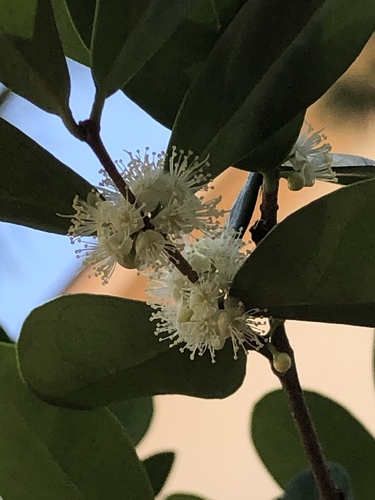
Spanish stopper (Eugenia axillaris) is an evergreen shrub to small tree native to the Caribbean, the Bahamas, and extreme southern Florida, common in hammocks, coastal strands, and limestone pinelands. Small opposite leaves and smooth bark read refined; black berries feed birds quietly without suburban mess theater. It suits salt-tolerant hedges, native buffers, and patio plantings in frost-free climates. ☀️💧 Sun and Water Requirements: - Full sun to light shade; densest screens in bright light. - Drought tolerant once established in humid maritime air; irrigate young plants through first dry seasons. - Well-drained, often alkaline rocky soils; container mixes must drain fast. ✂️ Propagation: - Seeds cleaned and sown fresh; germination can be slow. - Semi-hardwood cuttings under humidity in warm weather. - Shear lightly for formal hedges; avoid heavy cuts into bare wood without latent buds. 🌾 Harvest / Best Use Timing: - Fruit is edible when fully ripe and soft; flavor is mild—birds often disagree and arrive first. - Pick propagation seed before full pilferage if cages are used. - Mulch root zone to reduce evaporative stress in dry-season heat.
Permaculture Functions
- Edible: Ripe berries are nibbled fresh or preserved where sweetness is boosted.
- Wildlife Attractor: Fruit feeds birds; flowers feed small pollinators in warm months.
- Border Plant: Tolerates pruning into evergreen screens along paths and patios.
- Ornamental: Fine texture suits formal tropical hedges without thirsty exotics.
Practitioner Notes
- Frost sensitivity is the gatekeeper—trial it like citrus, not like hostas with delusions.
- Formal hedge envy demands irrigation honesty in dry-season heat—crisp leaves do not bluff.
- Birds schedule harvests—net ethically if you need human samples, not passive aggression.
Companion Planting
- Red Stopper — related Eugenia for staggered fruit colors in mixed evergreen buffers
- Wild Lime — native citrus relative sharing limestone and coastal humidity cues
- Myrtle Oak — scrub oak canopy over stopper hedges on sandy coastal ridges
Pest Pressure