About
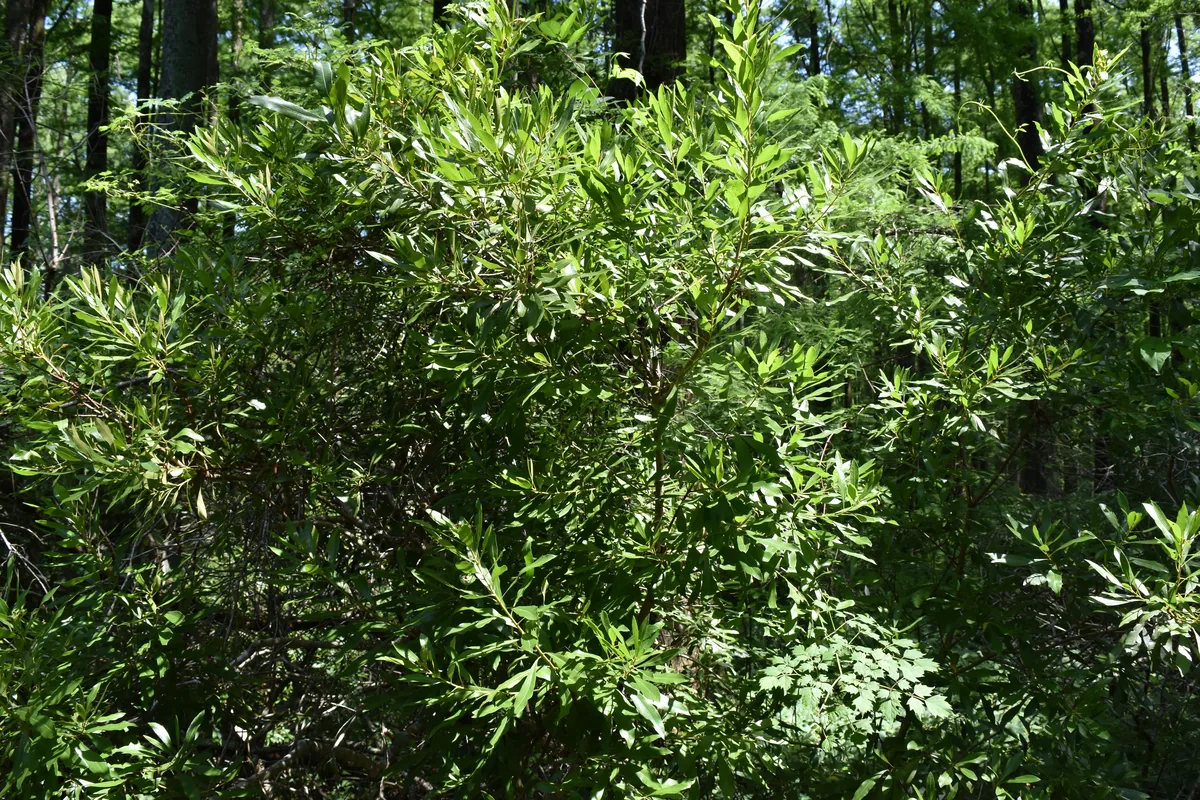
Wax myrtle (Morella cerifera) is an aromatic evergreen to semi-evergreen shrub or small tree native to the southeastern United States, including coastal Florida and similar humid sites. It typically reaches 3–6 m (10–20 ft), often multi-stemmed, with narrow leaves that smell resinous when crushed and waxy gray berries enjoyed by birds. Root nodules partner with actinobacteria to fix nitrogen—a quiet soil upgrade in sandy, lean ground. Full sun to light shade; denser in sun, looser in shade. Tolerates wet feet better than many shrubs once established; still prefers oxygenated soil over permanent stagnation. Salt spray tolerant—useful near coasts in Florida and Puerto Rico maritime exposures. Softwood cuttings in summer under humidity; dip in rooting hormone for consistency. Collect ripe berries, clean seed, sow promptly—germination improves with moist-warm stratification experiments. Dig root suckers in dormant season with some roots attached; pot until established. Berries historically rendered for bayberry-type wax—small-scale craft, not industrial yield. Prune for hedge shape in late winter before spring flush; avoid heavy shearing during nesting peak if wildlife is a goal.
Permaculture Functions
- Nitrogen Fixer: Morella cerifera hosts Frankia actinobacteria on roots -- nodules show up as small woody clusters on buried laterals in acid coastal sand where legumes rarely volunteer.
- Wildlife Attractor: Waxy gray drupes fuel migrating warblers and winter sparrows -- dense branching gives cover for small reptiles and songbirds along scrub edges.
- Windbreaker: Multi-stem thickets 3--6 m tall blunt onshore salt gusts -- site a few rows staggered if you need real wind filtration, not one lonely shrub.
- Erosion Control: Fibrous roots bind hurricane-cut banks and pond spoil -- tolerates episodic wet feet better than most broadleaf evergreens on Gulf dunes.
- Border Plant: Informal hedge accepts hard pruning yet still reads Coastal Plain native -- resinous leaves smell like bay-rum chemistry when bruised.
Companion Planting
Threats & Pressure