About
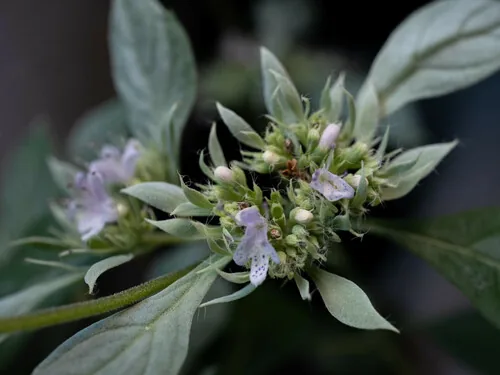
Mountain mint here refers to Pycnanthemum muticum, a native eastern North American perennial mint relative with silvery bracts that look frosted even at noon. Stems are square, leaves aromatic, and late-summer flower heads pull in pollinators like a magnet. It is a workhorse edge plant for herb spirals, orchard understories, and insectary strips where aggressive true mints would cause regret. Full sun to light shade; tighter spacing and more sun yield stiffer, upright clumps. Moderate moisture; tolerates short drought once deep roots establish but blooms heavier with even water. Average garden soil; tolerates clay if drainage is not stagnant. Division in spring or fall; replant vigorous outer ring pieces. Softwood cuttings in late spring root quickly under mist or humidity dome. Seeds: cold stratify; germination variable—division is faster for landscape use. Snip leafy flowering tops just as bracts color for tea or drying; aroma peaks before full brownout. Leave at least a third of stems for late pollinators and winter structure. Dry bundles upside down in shade with airflow to preserve volatile oils.
Permaculture Functions
- Edible: Silvery-bracted Pycnanthemum muticum tops snip into minty teas, syrups, and herb salts with a resin spike distinct from spearmint -- harvest before stems brown out completely if you want peak volatile-oil perfume in the dry rack.
- Pollinator: Tight white to lavender flower heads pack nectar accessible to small native bees, wasps, tachinid flies, and late-summer butterflies when goldenrods open nearby -- leave a third of stems uncut so insects finish fueling before frost.
- Pest Management: Crushed lamiaceous foliage releases monoterpenes that mask brassica host cues when bands are planted along vegetable rows -- best paired with scouting because scent helps confusion, not a force field against heavy infestations.
- Wildlife Attractor: Insect traffic on mint heads pulls warblers, flycatchers, and chickadees to hunt along hedgerow edges -- position clumps where you can watch the aerial feeding frenzy without shading sun-hungry crops flat.
Companion Planting
Threats & Pressure