About
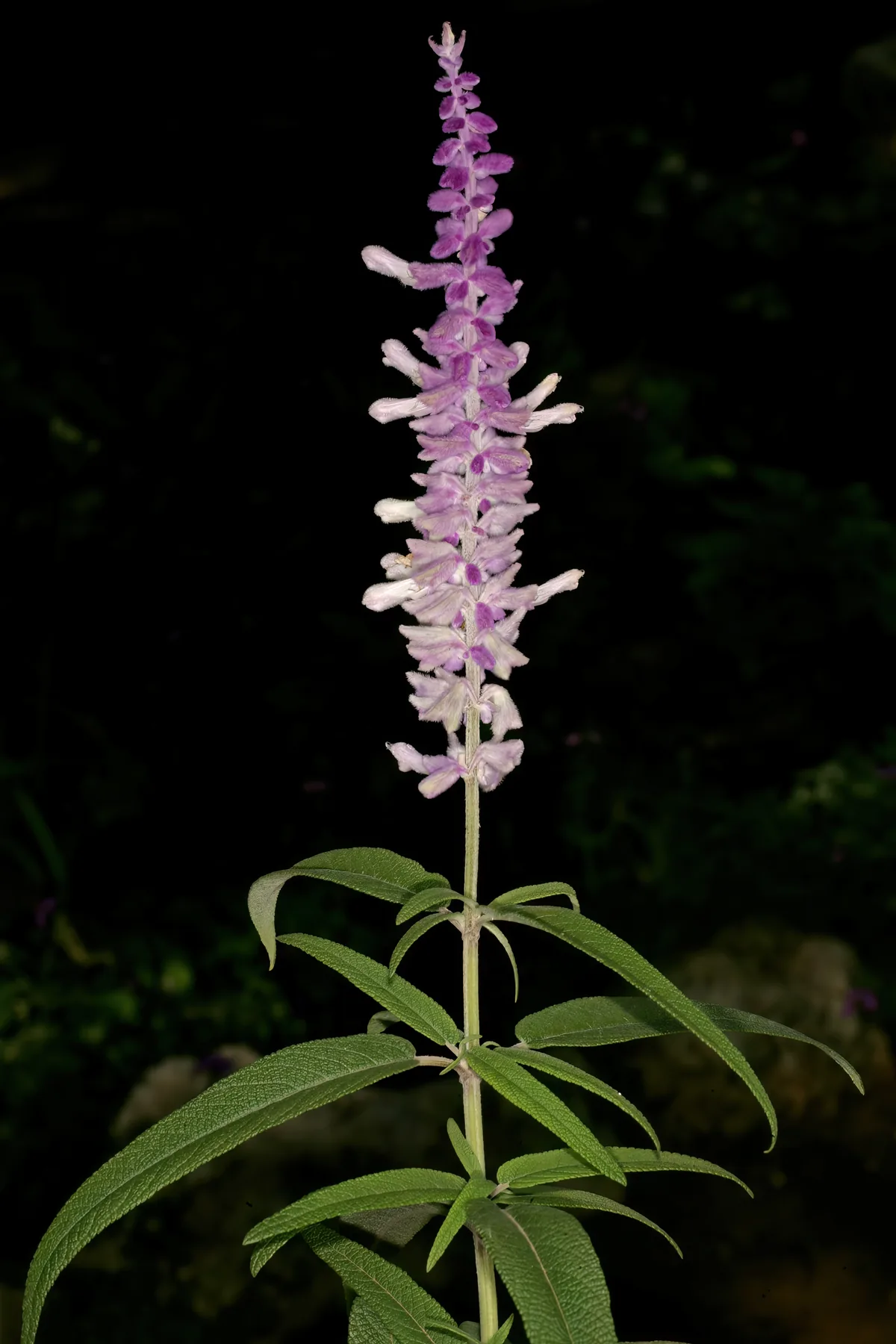
Mexican bush sage is the fuzzy purple fireworks plant hummingbirds treat like a VIP lounge. Upright spikes of velvety flowers ride above aromatic foliage from late summer into frost. In subtropical and tropical Americas it often behaves as a die-back shrub: freezes to the ground in hard winters, rebounds when soil warms if roots are mulched and drainage is honest. Full sun for maximum bloom density. Moderate water; drought-tolerant once established but sulks in baked sand without mulch. Well-drained soil; wet winter feet rot crowns. Softwood cuttings in warm, humid conditions. Division of mature clumps in spring. Seeds possible but variable; clones preserve the show. Cut long stems for bouquets before flowers fully brown. Leave late blooms for migrating pollinators.
Permaculture Functions
- Pollinator: Salvia leucantha loads velvety purple tubes with nectar that hummingbirds and long-tongued bees mob from late summer into frost -- site in full sun so spikes stay dense, not sparse.
- Ornamental: Fuzzy inflorescences read as lavender fireworks above gray-green foliage -- die-back shrub where hard freezes hit, returning from mulched crowns when soil warms.
- Wildlife Attractor: Late nectar extends migration corridors in warm-temperate yards -- leave spent spikes if seed-feeding birds matter more than tidy edges.
- Border Plant: Upright habit frames paths and sun gaps without lawn -- sharp drainage avoids winter crown rot in wet shade.
Companion Planting
- Boggy shade with poor airflow