About
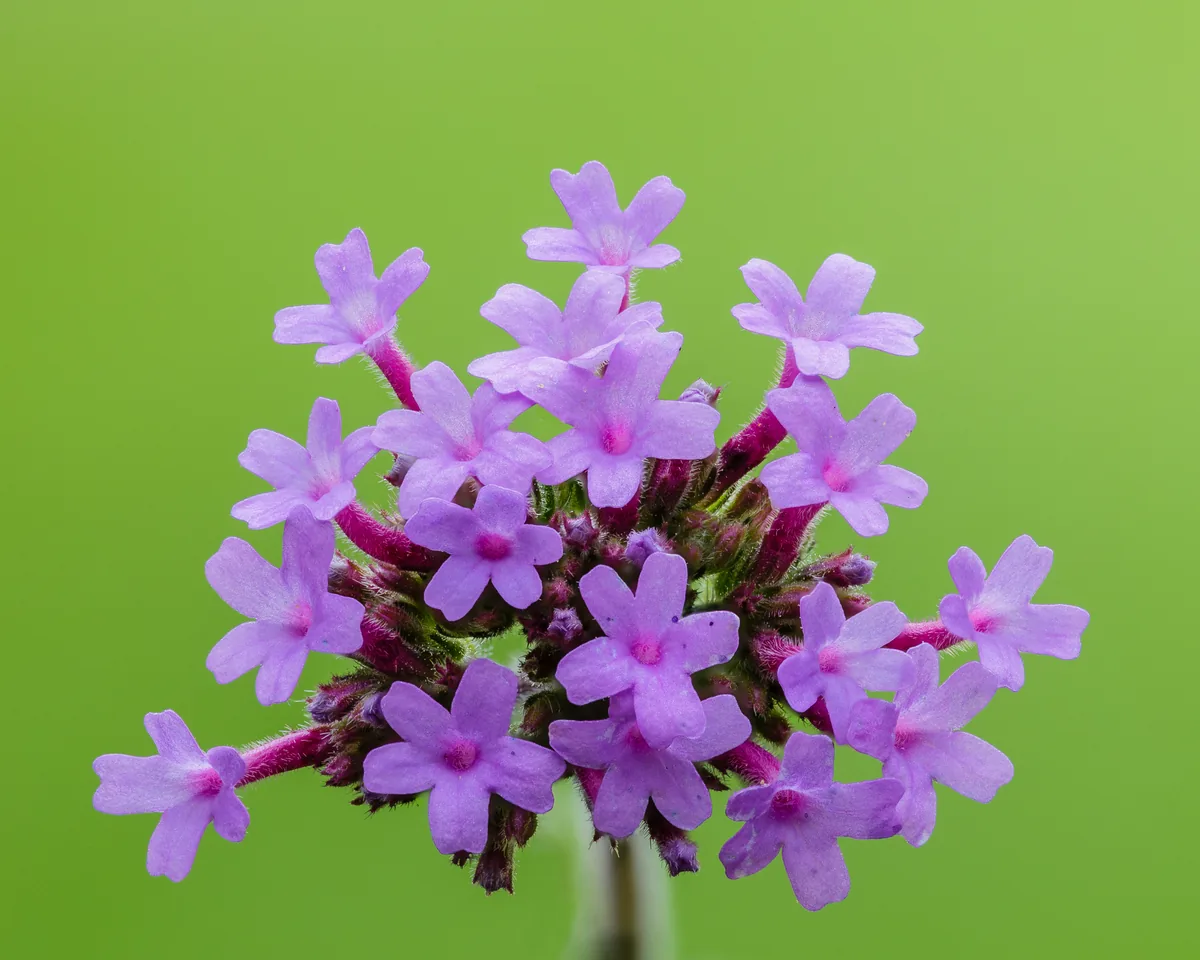
Verbena bonariensis is a clump-forming perennial famous for wiry 1.2–1.8 m (4–6 ft) stems that hover small purple flower clusters at eye level, like a meadow on stilts. It self-sows politely to enthusiastically depending on site—deadhead if you want control, shake seed if you want a drift. In Florida and Puerto Rico it often behaves as a short-lived perennial or self-replacing annual; plan for renewal, not immortality. Full sun for strongest stems; some afternoon shade acceptable in hottest pockets. Average to lean soil; drought-tolerant once established—overwatering and tight airless corners invite mildew. Sharp drainage helps during humid wet season downpours. Sow seed indoors 8–10 weeks before last frost or direct-sow after soil warms; germinates in warm conditions. Basal cuttings in spring root quickly under humidity dome. Divide mature clumps in early spring before new growth accelerates. Cut stems for long-lasting pollinator support in borders; remove spent heads before seed drop if containing spread. Leave late stems standing for beneficial insects where self-sowing is welcome.
Permaculture Functions
- Pollinator: Verbena bonariensis clouds of lavender disc florets run midsummer through frost in warm districts -- skippers and small bees work the platform inflorescences at eye level.
- Wildlife Attractor: Finches and sparrows strip dry heads if you skip deadheading -- leave a few clumps for winter vertical seed architecture.
- Ornamental: Wiry 1.5 m stems hold flowers in transparent curtains -- you can plant shallowly in front of coarse textures without visual walling.
- Border Plant: Clump expands politely in lean soil; self-sows in disturbed cracks -- edit volunteers if formal edging matters.
- Biomass: Hollow winter stalks bulk compost quickly when cut in spring -- faster breakdown than ligneous shrub prunings.
Companion Planting
- Mint