About
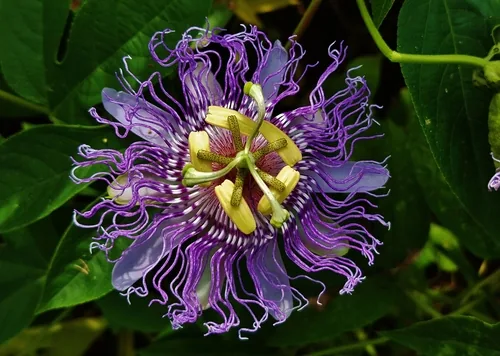
Passiflora edulis is the tropical passion fruit vine — the one producing the wrinkled purple or yellow fruit sold in markets worldwide. Native to southern Brazil, Paraguay, and northern Argentina, it climbs aggressively by tendrils to 15–20 ft (4.5–6m) and flowers prolifically in warm climates. The intricate white and purple flowers are among the most structurally complex in the plant kingdom and attract bees, wasps, and hummingbirds. Fruit ripens when it drops or the skin wrinkles — tart, aromatic pulp with edible seeds. Full sun required for flowering and fruiting; part shade reduces yield significantly. Regular moisture during establishment and flowering; drought-tolerant once established but consistent irrigation improves fruit set. Seeds: fresh seed germinates readily; older seed benefits from scarification and 24-hour soak. Cuttings: semi-hardwood cuttings root easily in warm humid conditions — faster to fruit than seed. Layering works well where stems touch moist soil. Fruit is ripe when it falls naturally or skin wrinkles and turns deep purple. Pick daily during peak season — fruit left on ground deteriorates quickly. Pulp and seeds eaten fresh, juiced, or used in desserts and drinks.
Permaculture Functions
- Edible: Passiflora edulis fruit signals readiness when the husk wrinkles and the berry drops with a hollow sound -- scoop tart jelly around crunchy seeds for juice or sorbet; green fruit stays starchy and tight to the rind.
- Medicinal: Dried leaf tea shows up in Brazilian clinic traditions for mild anxiety and sleep onset -- harmala-related alkaloids mean MAOI interactions are possible; map your medication list before making it a nightly liter habit.
- Pollinator: Fringed corona hides nectar at the base of elevated anthers that need buzz pollination -- large carpenter bees (Xylocopa) and some stingless bees give the vibration that actually sheds pollen onto the stigma.
- Wildlife Attractor: Gulf fritillary and zebra longwing larvae strip leaf tissue down to veins on the same vines that feed you -- plant extra sacrificial stems or accept holey leaves as the price for adult butterflies wherever those species overlap Passiflora in humid warm-temperate to tropical sites.
- Ornamental: Radial white-and-lavender face blooms read like engineered origami on cattle-panel trellis -- annual-ish top growth in marginal winters still gives vertical drama faster than waiting on wisteria lignification.
Field Observations
- Plant on a sturdy trellis from day one — a cattle panel or heavy wire works better than PVC in wind.
- Gulf Fritillary and Zebra Longwing butterflies will use it as a host plant; this is a feature not a bug.
- In zone 9b expect die-back in cold winters — the roots often survive and resprout in spring.
- Two plants cross-pollinate better than one for fruit set.
- Fruit drops when ripe — check daily during peak season or you will find it on the ground half eaten.
Companion Planting
- Frost sensitive — hard freeze kills the vine; roots may not survive below 28°F (-2°C)
- Aggressive grower — can overtake small shrubs if not managed
- Not the same as Maypop (Passiflora incarnata) which is cold-hardy to zone 5