About
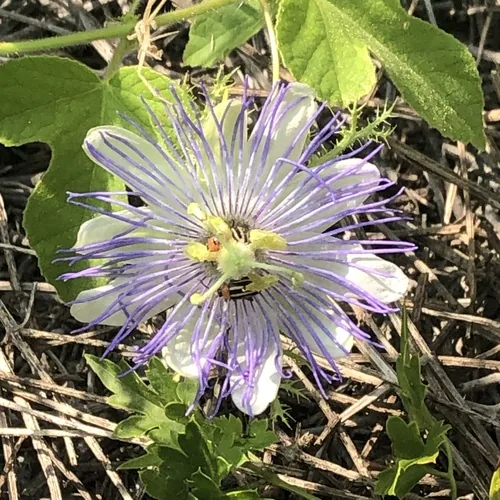
Wild passionfruit is the frilly invasive-adjacent Passiflora of roadsides and dunes—sticky hairs, bracts that look like origami gone feral, and marble-sized fruit that range from pleasantly tart to “why did I trust a meme.” Check local status: it is a problem plant in some Pacific islands and managed areas. Behaves as a perennial vine where frosts are light in warm coastal margins. Gulf fritillary caterpillar buffet—same tradeoff as maypop. Full sun for flowers and fruit. Drought-tolerant once established; laughs at sandy soil. Seeds spread by wildlife; cuttings root readily—do not help it escape your fence if regulations say no. Pick marble-sized fruit when color and aroma say ripe—flavor swings from tart to regrettable.
Permaculture Functions
- Edible: Passiflora foetida marble fruit varies tart to insipid by clone -- remove bracts; check local laws before encouraging spread.
- Wildlife Attractor: Gulf fritillary larvae strip leaves; birds scatter seeds -- balance butterfly joy against island invasion lists.
- Ground Cover: Sticky hairs and trilobed leaves laminate chain-link -- mow escapes if dunes are protected.
- Medicinal: Passiflora alkaloids show up in folk sleep teas -- species-specific chemistry; do not swap with Passiflora incarnata doses blindly.
Companion Planting
- Releasing near preserves where listed
- Letting it smother saplings you actually like
- Native grasses
- Coastal scrub species