About
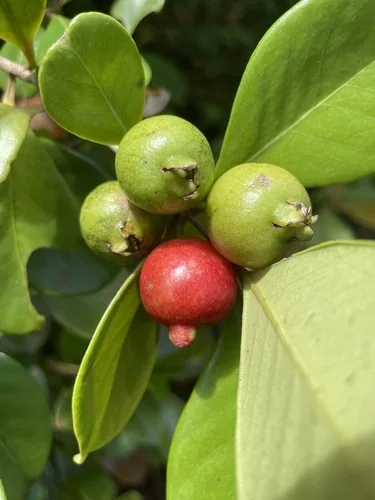
Cattley guava is the adorable fruit shrub that eats Florida hammocks if you blink. Sweet, aromatic berries make killer jelly; birds make new infestations. It is regulated or targeted for control in parts of the state — treat existing plants as a management job, not a flex. Sun, heat, and sandy soil are easy mode; drought tolerance is real once established. Full sun for maximum fruit. Moderate water; tolerates short droughts when mulched. Well-drained acid-to-neutral soils typical of coastal Florida. Seeds via fruit — please do not spread. Cuttings and air-layering for controlled clones where legal. Pick when deep maroon and aromatic. Remove fallen fruit if you are serious about seed control.
Permaculture Functions
- Edible: marble-sized red or yellow berries make tart jam, wine, and fresh snacks -- after sorting out fruit fly damage in humid yards.
- Wildlife Attractor: ripe fruit pulls frugivorous birds and fruit flies that spread seeds into hammocks and conservation land -- so fallen fruit cleanup is part of stewardship where listed.
- Ornamental: smooth exfoliating bark and glossy myrtle leaves stay evergreen in warm climates so the shrub reads ornamental even -- when managers must treat it as a regulated landscape plant.
Companion Planting
- Wildlands interfaces and conservation parcels
Threats & Pressure