About
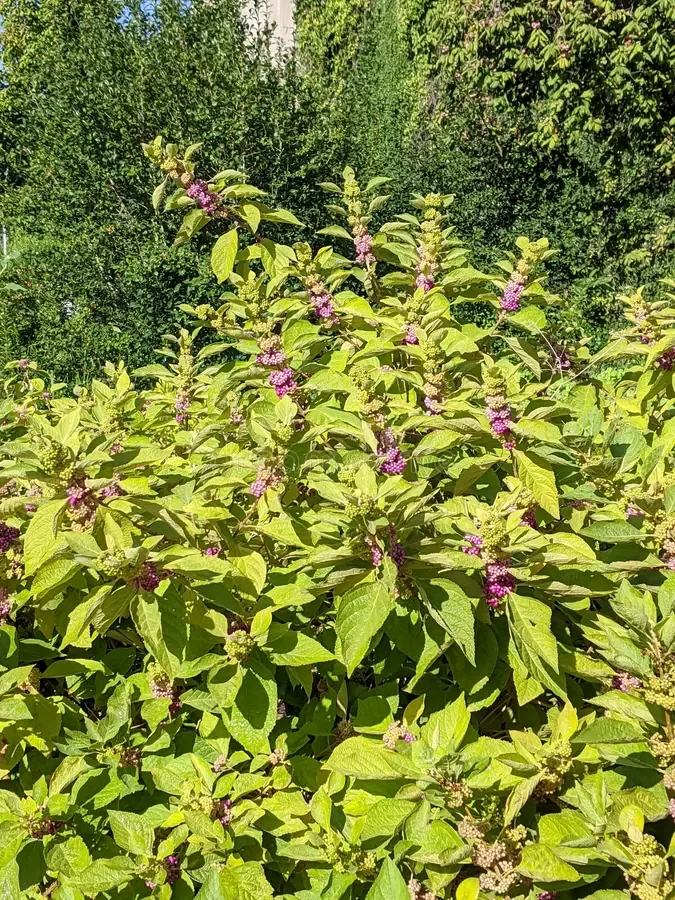
Beautyberry (*Callicarpa americana*) is a deciduous shrub native to the southeastern United States. It typically grows 3 to 6 feet (0.9 to 1.8 meters) tall and wide, featuring an open, loose appearance with arching branches. The plant bears medium green, opposite leaves with a coarse texture. In summer, small, pink to lavender flowers emerge in clusters (cymes) at the leaf axils, giving way to striking clusters of glossy, bright purple berries in the fall. These vibrant fruits often persist into winter, providing visual interest and food for wildlife. Seeds: Collect fully ripened (purple) berries and extract the seeds. Sow them in pots or directly in the ground in fall or spring, covering lightly with soil. Germination may take several weeks. Cuttings: Take semi-hardwood cuttings in late summer. Remove the lower leaves and plant the cuttings in a well-draining medium. Maintain high humidity and indirect light until roots develop. Sun: Thrives in full sun to partial shade. While it can tolerate full shade, berry production is more prolific with increased sunlight. Water: Prefers moist, well-drained soils but is adaptable to various soil types. Once established, it exhibits moderate drought tolerance. Regular watering promotes healthy growth and fruiting. Berries: Harvest the berries in early fall when they are fully mature and vibrant in color. They can be used to make jellies, wines, or left on the shrub to support local wildlife.
Permaculture Functions
- Edible: Magenta-purple clusters are astringent off the bush -- cook with plenty of sugar into jelly that sets pink, or ferment to country wine where tannin reads as structure instead of fault.
- Medicinal: Crushed fresh leaves rubbed on skin release callicarpenal and related terpenes that repel mosquitoes in USDA field trials -- reapply hourly like any plant oil; test a small skin patch first.
- Wildlife Attractor: Mockingbirds and cardinals strip branches after first hard frost when insect protein is scarce -- leave one shrub unpruned as a winter bird pantry.
- Border Plant: Loose arching habit to six feet marks woodland edges along paths without forming a solid wall -- hard cutback in late winter forces long straight fruiting wood.
- Pollinator: Small axillary pink cymes feed native bees in July heat -- bloom when large single flowers have passed peak.
- Pest Management: Leaf chemistry is strong enough that some gardeners tuck prunings into chicken coops as temporary litter to confuse biting flies -- replace when dry and dusty.
Field Observations
- No field observations yet
Companion Planting
No companion data yet.
Also mentioned as companions:
- Oak
- Pine
- Magnolia
Not yet profiled in PermiePortal
Threats & Pressure