About
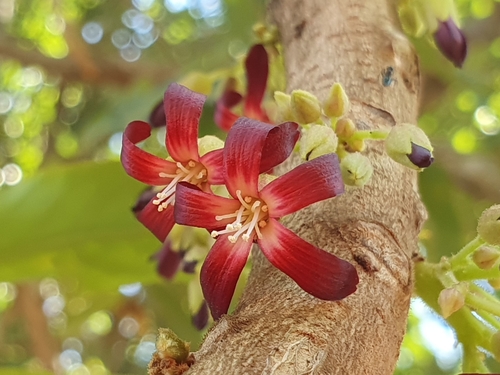
Bilimbi (Averrhoa bilimbi) is a small tropical tree closely related to star fruit, bearing extremely sour, cucumber-shaped fruits used pickled, cooked, and in beverages across humid tropical kitchens. It typically reaches 15–33 feet (5–10 m) with a short trunk, many spreading branches, and pinnate leaves; flowers and fruit arise directly from trunks and older wood. The species suits home orchards and spice gardens where acid is an ingredient, not an insult. ☀️💧 Sun and Water Requirements: Full sun drives flowering and heavy fruiting; partial shade reduces yield. Likes steady moisture in well-drained, fertile soils; drought during fruit set causes drop. Protect from prolonged cold below about 32°F (0°C); light frosts damage young growth quickly. ✂️ Propagation: Sow seeds fresh for volunteer trials; vegetative propagation maintains known sourness levels. Air-layer fruitful branches during warm, humid months. Container culture works in marginal zones if moved during cold spells—still a chore, not a cheat code. 🌾 Harvest / Best Use Timing: Pick fruit green for pickles and curries, or allow slight yellowing for different uses—flavor remains aggressively tart. Harvest frequently; heavy loads can stress brittle wood. Prune to open the center and reduce wind breakage on overloaded limbs.
Permaculture Functions
- Edible: Extreme acidity brightens pickles, sambals, and drinks where sugar balances the slap.
- Medicinal: Fruit and flower appear in folk preparations where legality and expertise apply.
- Ornamental: Rambling habit and cauliflorous fruiting look like nature’s opinion on minimalism.
- Shade Provider: Modest canopy shades understory herbs during wet season growth.
- Pollinator: Small flowers on old wood feed generalist pollinators during warm months.
Practitioner Notes
- Acid level is not subtle—taste before scaling recipes written for mild lemons.
- Cauliflorous fruiting means trunk scratches; harvest baskets beat shirt pockets.
- Star fruit relatives share some pests; rotate monitoring, not just hope.
- Container trees need faithful watering; vacation drought turns leaves into yellow confetti.
Companion Planting
- Lemongrass — aromatic edge planting tolerates tropical heat and marks paths under low branches
- Papaya — uses vertical light differently; bilimbi stays shorter and wider in many sites
- Turmeric — rhizomes along the shaded north flank with mulch and drainage
- Brittle wood — long fruit clusters weigh down limbs; prune for structure before storms volunteer
Pest Pressure