About
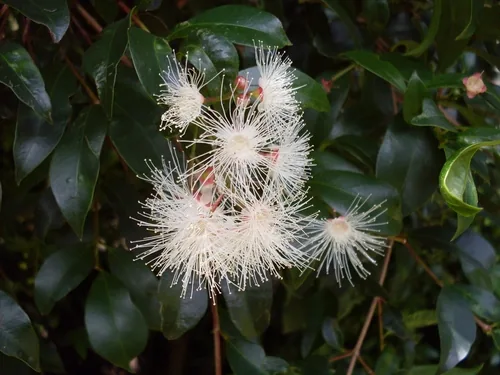
Brush cherry (Syzygium paniculatum) is an Australian myrtle relative grown as an evergreen shrub or small tree with glossy leaves, fluffy white flowers, and magenta to purple pear-shaped fruit. It reaches 15–40 feet (4.5–12 m) if unpruned but accepts repeated shearing as a formal hedge in frost-free climates. Fruit is edible when ripe with variable sweetness; in food forests it doubles as a privacy screen and bird buffet—plan interior thinning so hedges do not become fungal apartments. Full sun to partial shade; dense shade reduces flowering and fruit. Prefers rich, moist, well-drained soil with mulch; tolerates coastal exposure in humid subtropical climates. Protect from hard frost; young wood burns near 28°F (-2°C) without shelter. Sow fresh seed; semi-hardwood cuttings under mist during warm months for clones. Hedge plants need periodic thinning cuts, not only shearing skin, to keep inner wood alive. Pick fruit when deep magenta, slightly yielding, and aromatic—flavor varies by clone. Use for jams, jellies, or fresh sampling; seeds are small. Prune after main fruiting flush if you need size control without sacrificing all next season’s wood.
Permaculture Functions
- Edible: Syzygium paniculatum magenta pomes soften like tiny pears for jam batches -- where acid and pectin partners match the variable sugar from seedling trees.
- Ornamental: Glossy opposite leaves and copper new growth read clean on sheared hedges -- so neighbors see structure while you still get backyard fruit.
- Wildlife Attractor: Masses of white myrtle flowers feed honeybees in warm weeks -- ripe fruit draws noisy flocks of fruit-eating birds wherever humid subtropical hedges ripen heavy pomes.
- Border Plant: Responds to electric trimmers every six weeks in frost-free zones -- holding a dense face along pool fences if you thin interior wood yearly.
- Shade Provider: 4–12 m rounded crowns cast humid shade for understory turmeric -- once mulch keeps root zone evenly moist through tropical wet seasons.
Companion Planting
- Myrtle rust regions — monitor new growth and choose resistant lines where available
- Sheared walls without thinning — interior dieback invites pests and awkward hollow hedges
Threats & Pressure