About
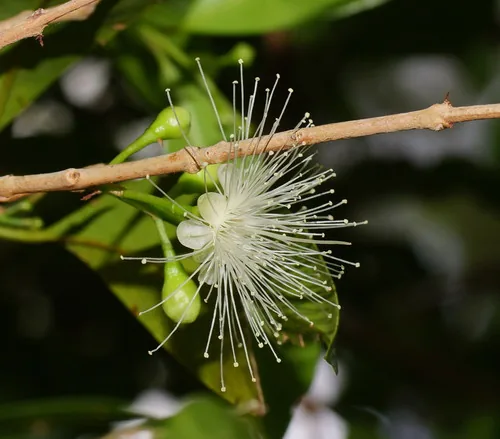
Scrub cherry (Eugenia foetida) is an evergreen myrtle shrub to small tree of Caribbean and subtropical coastal scrub, with small opposite leaves, inconspicuous flowers, and dark berries valued by birds. Plants typically reach 6–15 feet (1.8–4.5 m), often multi-stemmed and tolerant of salt spray, drought, and limestone. It belongs in coastal buffers, wildlife hedges, and xeric subtropical borders where maintenance budgets are honest. Full sun to partial shade; densest growth in strong light. Well-drained sandy or rocky soils suit it; tolerates brackish exposure and seasonal drought once established. Mulch young plants; avoid chronic waterlogging. Sow fresh seed; semi-hardwood cuttings root under humidity. Prune for hedge shape or clearance; open interior occasionally for airflow in humid spells. Berries are primarily wildlife food—human use is uncommon. Leave fruit for birds during migration windows. Growth flushes follow warm wet periods.
Permaculture Functions
- Wildlife Attractor: Eugenia foetida dark pea-sized berries disappear into migrating songbirds -- while compact evergreen crowns hide quail-scale cover in limestone scrub.
- Border Plant: Tolerates repeated clipping into knee-high maritime hedges -- that survive salt gusts inland designers rarely model.
- Ornamental: Tiny opposite boxwood-gloss leaves flash fine texture against coarse tropical neighbors -- without constant hose attention.
- Erosion Control: Fibrous roots cling to skeletal coral rock and blow-sand cuts -- where turf dies in one drought week.
Companion Planting
- Name collision—“scrub cherry” labels shift; this entry uses Eugenia foetida per coastal horticulture usage
- Heavy clay inland without drainage — rot during wet cool spells
Threats & Pressure