About
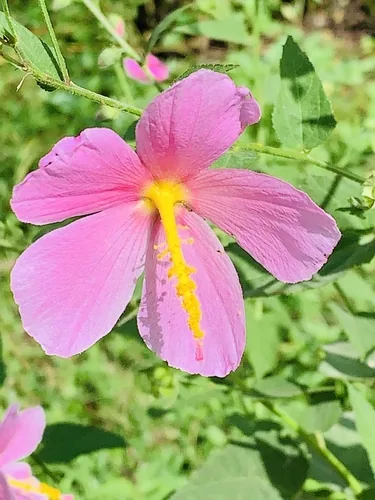
Marsh mallow (Althaea officinalis) is a robust herbaceous perennial native to Europe, North Africa, and parts of Asia, long naturalized in temperate North America wherever ditches stay damp. Soft, gray-green leaves are velvety; summer brings pale pink to white flowers on tall branching stems. Roots and leaves entered kitchen and apothecary history as mucilage-rich thickeners long before factory candy co-opted the name. Full sun to light shade; more sun needs more soil moisture. Moisture-loving; thrives along pond margins, rain gardens, and seasonally wet meadows. Deep, fertile, loamy soil with steady water beats occasional drought stress. Seeds: surface-sow in cool weather; germination in 2–4 weeks with steady moisture. Root cuttings of pencil-thick pieces buried horizontally in moist sand in late winter. Division of crowns in spring or autumn; replant immediately and water deeply. Pick young leaves and flower buds before fibers toughen; use fresh or dry for tea blends. Dig roots in autumn of second year or later; wash, slice, and dry for decoctions. Flowers attract pollinators—leave a percentage uncut if seed saving.
Permaculture Functions
- Edible: Althaea officinalis young tops thicken soups like okra without the slime stigma -- roots harvested after second year yield true marshmallow mucilage for old-style confections, not bagged fluff.
- Medicinal: Root polysaccharides coat irritated throat and gut lining in traditional European practice -- use as simple syrup bases at food doses unless a clinician steers stronger extracts.
- Pollinator: Pale pink mallow flowers offer open, accessible pollen to daytime bees along ditch margins -- plant in drifts so pollinators find volume at boot height.
- Wildlife Attractor: Tall stems give cover to dragonflies and small birds along pond toes -- leave seed heads if finches need late-season pickings.
Companion Planting
Threats & Pressure