About
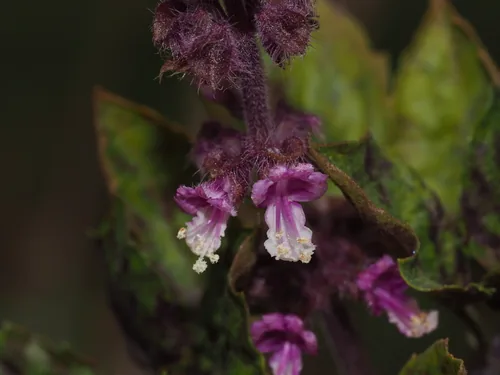
Tulsi is the basil Hindu kitchens and Ayurvedic shelves agree on—clove-pepper aroma, fuzzy stems, terminal flower spikes the bees treat like a buffet. Several forms exist (Rama, Krishna, Kapoor types); all want heat and sun. Perennial in frost-free pockets; everywhere else grow as a warm-season annual or overwinter cuttings on a windowsill like a civilized mammal. Full sun, well-drained fertile soil. Consistent moisture; do not drown crowns. Seed in warm soil; softwood cuttings root fast in summer; tip pinching delays bloom and stretches leaf harvest. Harvest leafy tops for tea and kitchen use before heavy flowering unless seed is the goal.
Permaculture Functions
- Medicinal: Ocimum tenuiflorum is the Ayurvedic "holy basil" -- adaptogen and respiratory teas rely on eugenol-rich chemotypes; research liver enzyme interactions before heavy daily use.
- Edible: Leaves carry clove-pepper punch distinct from sweet basil -- chop into Thai soups and chutneys at the last second so heat does not volatilize the whole sermon.
- Pollinator: Terminal flower spikes open progressively in tropical heat -- honeybees work the columns when you stop pinching for seed.
- Pest Management: Volatile oils repel or mask some chewing insects on adjacent rows -- interplant as aromatic confusion, not as a pesticide substitute.
Field Observations
- No field observations yet
Companion Planting
Good Neighbors
Cautions
- Shady boggy corners
- Hard frost without protection
Threats & Pressure
🐛 Pests