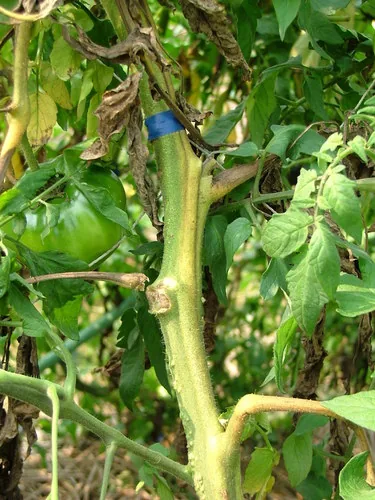
Field Identification
If leaves, stems, or fruit suddenly look spotted, sunken, or rotting, fusarium wilt may already be active. This problem often starts small, then spreads across healthy tissue before most growers realize how serious it is. Warmth, moisture, and crowded foliage usually speed it up. Treat early, because waiting even a few days can turn a manageable infection into major crop loss.
Look for a pattern, not one bad leaf: expanding spots, dark or pale halos, fuzzy growth, or tissue that collapses when touched. Check both leaf surfaces, stem bases, and fruit scars where symptoms first appear. New lesions after rain, overhead watering, or heavy dew are a strong clue. When separate spots begin merging into larger dead patches, the disease is advancing quickly.
Not sure what you have? Use the symptom diagnosis tool →
How to Deal With It
Organic Control Methods
Trichoderma harzianum and T. viride are soil fungi that actively suppress Fusarium by competing for space and nutrients and producing antifungal compounds. Apply as a root drench or incorporate into transplant holes — available commercially. Bacillus subtilis strains (Serenade, RootShield) colonize root surfaces and produce antibiotics that inhibit Fusarium germination. Apply preventively — these products cannot cure an infected plant but significantly reduce infection rates on healthy ones. Mycorrhizal inoculants on transplants strengthen root systems and make plants more resistant to Fusarium infection.
Fusarium wilt lives in soil as spores for 20+ years — once a bed is infested there is no practical way to eliminate it. Prevention is everything. Use certified disease-free seed and transplants. Rotate susceptible crops (tomato, basil, banana, melon) on minimum 4-year cycles. Fusarium enters through wounds and natural root openings — minimize root damage at transplant. Soil pH below 6.5 and high ammonium nitrogen favor Fusarium — maintain pH 6.5-7.0 and use nitrate nitrogen sources.
Resistant varieties are the single most effective management tool where available — look for F1, F2, or F3 resistance ratings on tomato seed packets. Remove infected plants immediately including the root ball and discard in trash — do not compost. Sanitize tools and stakes between plants with 10% bleach solution. Improve drainage — waterlogged soil dramatically increases Fusarium infection rates. Grafting susceptible varieties onto resistant rootstocks is standard in commercial tomato and melon production.
Soil solarization — clear plastic over moist soil for 4-6 weeks in summer — reduces Fusarium spore loads in the top 6 inches of soil where it is hottest. Effective in Florida and other high-sun climates. Steam treatment of greenhouse beds and propagation mix eliminates Fusarium before planting. Destroy infected plants and root balls completely — do not leave them in the field or compost pile.
No spray cures a Fusarium-infected plant — once vascular tissue is colonized the plant will die. Soil drenches with Trichoderma or Bacillus products used preventively on clean ground reduce infection rates. Copper sulfate soil drench has some suppressive effect on Fusarium propagules but is not a reliable cure. Focus all chemical effort on prevention before planting, not treatment after symptoms appear.
Let Nature Handle It
Natural Enemies
- Trichoderma harzianum
- Bacillus subtilis
- Nonpathogenic Fusarium
Threat Map