About
Angled loofah is the ridged cousin of the sponge loofah — young fruit stir-fries like a cucumber with ambition; old fruit becomes fibrous skeletons for scrubbing dishes and exfoliating your bad decisions. It is a heat-loving annual vine that will climb your fence, your tomatoes, and your dignity if you skip a trellis. In subtropical and tropical Americas plant after soil warms; the first cold snap ends the party. Full sun and rich, organic soil with steady moisture during fruit set. Heavy feeder — compost and occasional balanced fertility beat miracle-gro cosplay. Trellis strongly; fruit hangs straighter and rots less than fruits on wet ground. Direct sow 2–3 seeds per hill after last frost, thin to strongest. Transplant: start indoors 3–4 weeks before last frost if you need head start on short seasons. Angled Loofah: pick fruits young for vegetable use or fully ripe for seed and sweetness goals -- one plant rarely serves both fantasies. Cut stems morning; afternoon wilt reduces quality fast above 90°F (32°C). Check trellis daily during peak set; hidden fruits split after rain.
Permaculture Functions
- Edible: Luffa acutangula young ridged fruits stir-fry crisp like assertive cucumbers when picked under 20 cm -- ridges hide sudden fiber, so harvest often during heat waves when fruits jump from tender to rope overnight.
- Fiber: Fully mature gourds dry to rattling seeds inside, then peel to expose angular sponge skeletons for scrubbing and crafts -- leave too long on the vine and pith rots before fibers set clean.
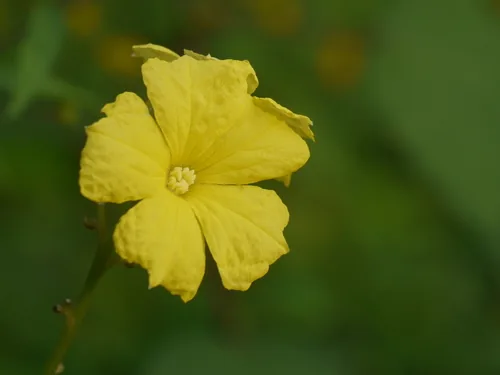
- Pollinator: Big yellow cucurbit flowers offer pollen and nectar mornings before squash bees dominate -- trellis vines so blooms stay off wet mulch where cucumber beetles party less.
Companion Planting
Also mentioned as companions:
- Bean
Not yet profiled in PermiePortal
- Wet foliage without airflow (disease city)
- Letting vines sprawl on damp soil