About
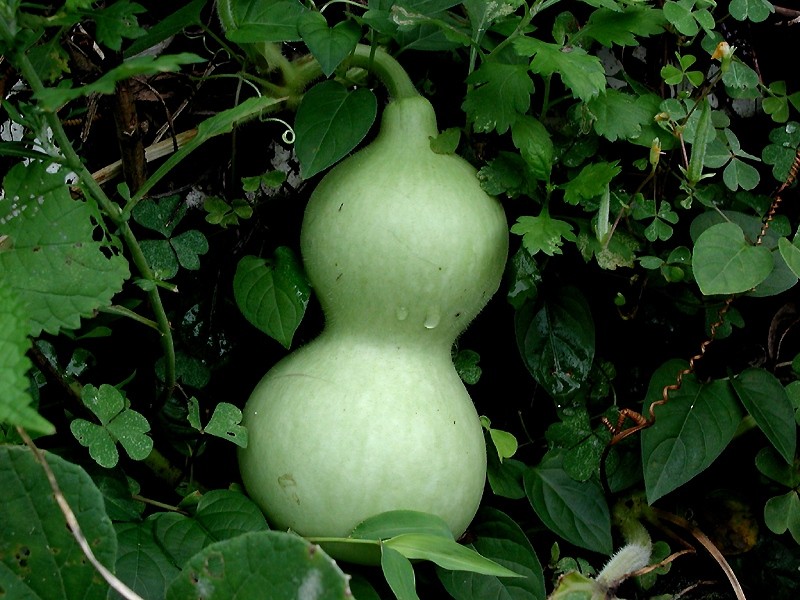
Birdhouse gourd is Lagenaria siceraria selected for big hollow fruits that dry into lightweight shells — crafts, rattles, and yes, actual birdhouses if you drill holes like a landlord who respects building codes. Young fruit is edible like other bottle gourds when tender; most growers chase size and shell thickness instead of salad. subtropical and tropical Americas: plant after soil warms; long vines need a sturdy arbor or you will find them in the neighbor's oak. ☀️💧 Sun and Water: - Full sun for strong vines and large fruit. - Consistent water during growth; cut back before harvest hardening to reduce rot. ✂️ Propagation: - Direct-sow 2-3 seeds per hill after frost, or start indoors 3-4 weeks ahead on fast-draining mix. - Provide trellis for clean fruit or mulch heavily if letting sprawl. Permie angle: one season of chaos, years of nest boxes and weird gifts.
Permaculture Functions
- Edible: Immature fruit in soups and stir-fries if harvested early.
- Ornamental: Dried gourds are craft stock and conversation fuel.
- Wildlife Attractor: Mounted houses for cavity nesters; hollow shapes vary by selection.
Functional cucurbits without pretending they are subtle:
Practitioner Notes
- Leave 1–2 inch (2.5–5 cm) stem when cutting mature gourds—open wounds invite rot during cure.
- Soak fully dried shells overnight before scraping inner pith—dry pith is concrete on knuckles.
- Large gourds need 4–6 inch (10–15 cm) drain holes for real nest boxes—tiny holes turn into cookers in sun.
Companion Planting
- Corn
- Beans
- Nasturtium
- Cold wet soil at transplant
Pest Pressure