About
Snake gourd is the absurdly long cucurbit that looks like a vegetable punchline until you trellis it like you mean business. Young fruits cook like fuzzy zucchini; mature gourds turn fibrous and head toward crafts. In subtropical and tropical Americas treat it as a heat-loving annual with a long runway — start warm, protect early season, and give a sturdy arbor or it will redecorate your fence without consent. Full sun. Steady moisture and fertile soil for rapid vine growth; mulch to even out swings. Excellent drainage to reduce soil pathogens. Direct sow after soil is thoroughly warm or start indoors under heat. Transplant carefully; roots sulk if mangled. Pick immature fruits for kitchen use. Leave selected fruits to mature for seed or hard-shelled uses.
Permaculture Functions
- Edible: Trichosanthes cucumerina harvests pencil-thin pods like fuzzy zucchini until seeds swell -- curry and pickle while flesh stays crisp before gourds hollow into sponges.
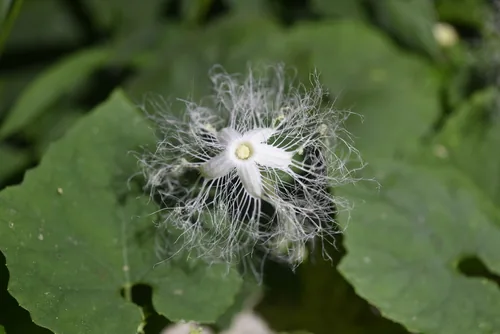
- Ornamental: Ivory fringed blooms open after dark under big leaves like lacework lanterns -- along sturdy arbors.
- Shade Provider: Rampant vines roof cattle panels so lettuce and ginger tucked underneath survive tropical noon sun -- once trellis height clears eight feet.
Companion Planting
- Cold wet soil at planting — sulk, rot, blame you