About
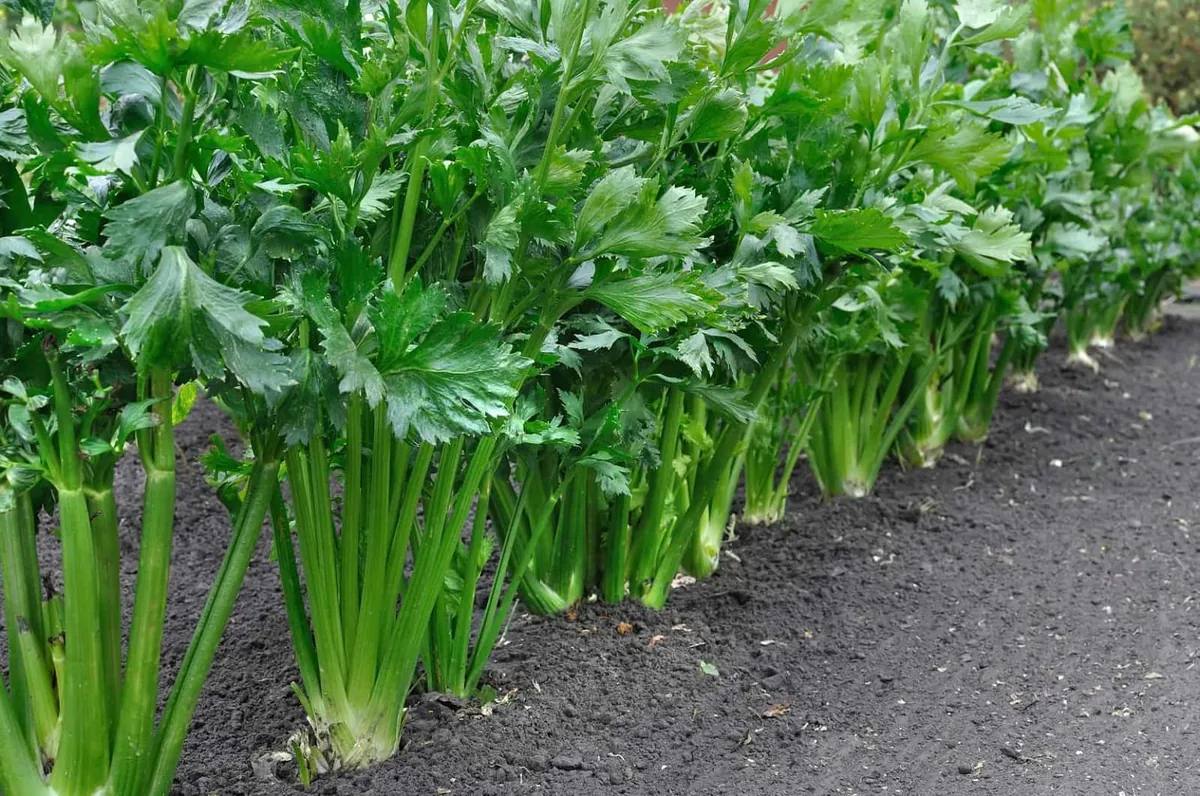
Celery (Apium graveolens) is a cool-season biennial grown for its crisp, fibrous stalks and aromatic leaves. It grows upright with thick, ribbed stems that reach heights of 30–60 cm (12–24 inches). The leaves are deeply serrated, and in its second year, it produces small white flowers that attract pollinators. Celery requires a long growing season and is highly sensitive to temperature fluctuations. It thrives in consistently moist, nutrient-rich soil and is often blanched by covering the stalks to improve their flavor and reduce bitterness. Prefers full sun but tolerates partial shade in warmer climates. Requires consistently moist, well-drained soil rich in organic matter. Sensitive to drought; regular watering is essential to prevent bitter stalks. Seeds: Start indoors 8–10 weeks before the last frost; transplant when seedlings are 10 cm (4 inches) tall. Cuttings: Can be regrown from the base of store-bought stalks in water. Division: Rarely propagated by division due to its biennial nature. Stalks are ready for harvest 90–120 days after planting. Cut outer stalks as needed or harvest the whole plant by cutting at the base. Leaves can be harvested anytime for seasoning or drying.
Permaculture Functions
- Edible: crisp petioles blanch for mirepoix while umbel seeds season pickles -- outer stalks strip first so inner heart keeps elongating in moist fertile rows.
- Medicinal: seeds and leaves enter diuretic and cooling teas in European herbalism -- where photosensitizing furanocoumarins still warrant sun caution after heavy use.
- Wildlife Attractor: second-year white umbels feed tachinid flies, parasitic wasps, and hoverflies -- if a few plants bolt on purpose beside brassica pest trouble spots.
- Mulcher: frost-killed leaves and trimmings rot fast into nitrogen-rich slurry that belongs in active compost, not anaerobic piles left bagged wet -- for weeks.
- Dynamic Accumulator: deep fibrous roots mine calcium and magnesium from compost-amended beds so chopped senescence returns those minerals to the topdress layer -- after harvest.
- Border Plant: upright ribbed rows edge tomato beds as a tall aromatic skirt that marks paths -- while sharing irrigation with shallow-rooted neighbors.
Companion Planting
- Carrot
- Parsnip
- Corn
Threats & Pressure