About
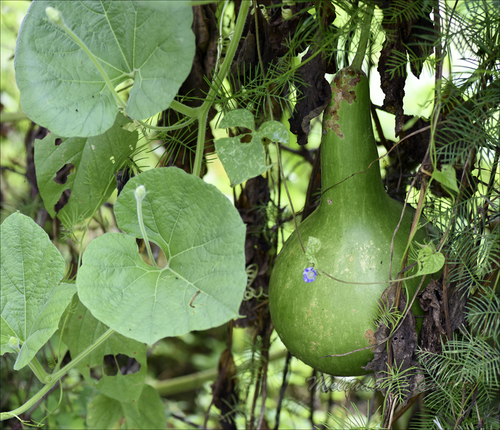
Dinosaur gourds are Lagenaria siceraria lines selected for thick, warty, often lime-green fruits that look like props from a B-movie—same species as utilitarian bottle gourds. Young fruit is edible like zucchini; most growers chase the fully cured shell for décor and craft. Needs a long warm season for maximum wartiness and hard shell cure before frost. Trellis improves shape and reduces soil contact blemishes. ☀️💧 Sun and Water Requirements: Full sun, fertile well-drained soil, steady moisture while sizing; taper off as shells harden. ✂️ Propagation: Direct-sow warm soil or careful transplants; fragile roots. 🌾 Harvest / Best Use Timing: Pick young fruit for zucchini-stage eating; leave warty fruits on-vine for full cure before frost if shells are the goal.
Permaculture Functions
- Ornamental: Warty fruits as annual sculpture on the vine.
- Edible: Young fruits if you harvest before they become art.
- Fiber: Cured gourds for rattles, masks, and questionable lamps.
Practitioner Notes
- Warty ornamental shells need long season—start indoors if frost-free days under 140.
- Thick stems need knife cuts, not twist-off—torn handles invite rot in the cure shed.
- Small entry hole plus interior scraping beats wide windows if you want structural shells.
Companion Planting
- Corn
- Beans
- Nasturtium
- Cold wet starts
- Powdery mildew parties without airflow
Pest Pressure