About
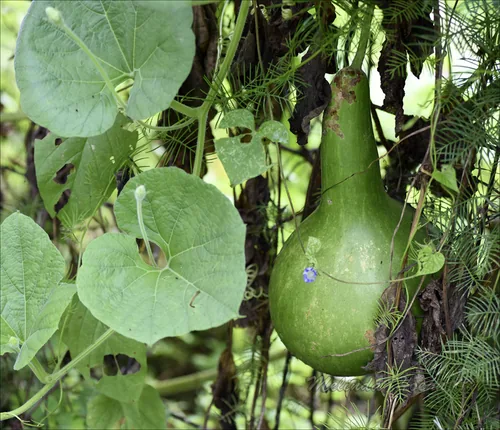
Bottle gourd is humanity’s original canteen project—vines that climb like they owe money, young fruit edible like summer squash, mature fruit dried into containers, instruments, and birdhouses your uncle swears are artisanal. Plant after soil warms; long season helps huge gourds cure on the vine before first frost. Downy mildew arrives on schedule every year—plan succession or resistant mindset. Full sun, fertile well-drained soil, consistent moisture during fruit sizing; cut water as fruits mature for hard-shell types. Direct-sow or transplant carefully; provide trellis or regret ground rot. Pick young fruit for summer-squash use; let mature fruits cure on-vine before first frost for hard-shell containers and crafts.
Permaculture Functions
- Edible: Lagenaria siceraria harvests pencil-thin fruit like summer squash for curries, then shifts to starchy gourds only -- if you stop picking and let skins lignify on the vine.
- Ornamental: Huge white night flowers and coiling tendrils cover arbors in one season -- giving vertical shade over beans without waiting years for a tree.
- Fiber: Fully cured shells turn into hard calabash for dippers, musical rattles, and bird boxes -- once seeds rattle free and walls pass the thumbnail scratch test.
Companion Planting
Also mentioned as companions:
- Corn
- Bean
Not yet profiled in PermiePortal
- Heavy wet foliage without airflow
- Planting next to susceptible cucurbits if you ignore rotation