About
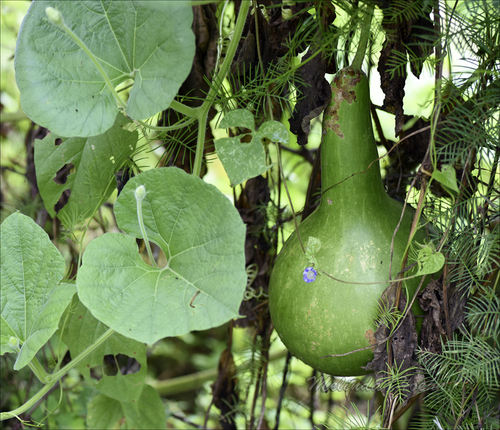
Caveman club gourd is a **Lagenaria siceraria** line selected for big, silly, hard-shelled fruits that look like props from a low-budget caveman flick. Young fruits can be eaten like other bottle gourds; mature ones lignify into clubs, rattles, and birdhouses after drying. subtropical and tropical Americas needs a long warm runway—start indoors, trellis hard, and accept that humidity invites fungal leaf speckle. ☀️💧 Sun and Water Requirements: - Full sun for size and shell thickness. - Fertile, well-drained soil; even moisture while vines run—cut back before harvest to harden fruit if your line benefits. ✂️ Methods to Propagate: - Seeds: sow warm; large seeds germinate fast when heat is real. - Isolate from other cucurbits if saving true seed—crossing happens. 🌾 Harvest notes: - For crafts, leave on vine until stems brown, then cure in dry airflow for months—patience beats moldy interiors.
Permaculture Functions
- Edible: Only young, tender fruits from known lines—verify edibility before bulk cooking.
- Ornamental: Harvestable absurdity on sturdy arbors.
- Animal Fodder: Trimmed vines sometimes feed stock after checking species tolerance—default is compost.
Practitioner Notes
- Club shapes need long hang time—start early indoors if your season is short or you carve tiny keychains, not clubs.
- Stem supports matter—heavy fruit snaps petioles; sling like melons once neck wood lignifies.
- Downy mildew moves after cool wet nights—remove oldest leaves at first yellow mosaic to slow ladder up the vine.
- Cure thick shells weeks in dry shade after vine kill—thumb test should not punch through before painting or display.
Companion Planting
- Corn
- Beans
- Nasturtium
- Weak trellis
- Crowding that blocks air and invites mildew parties
Pest Pressure