About
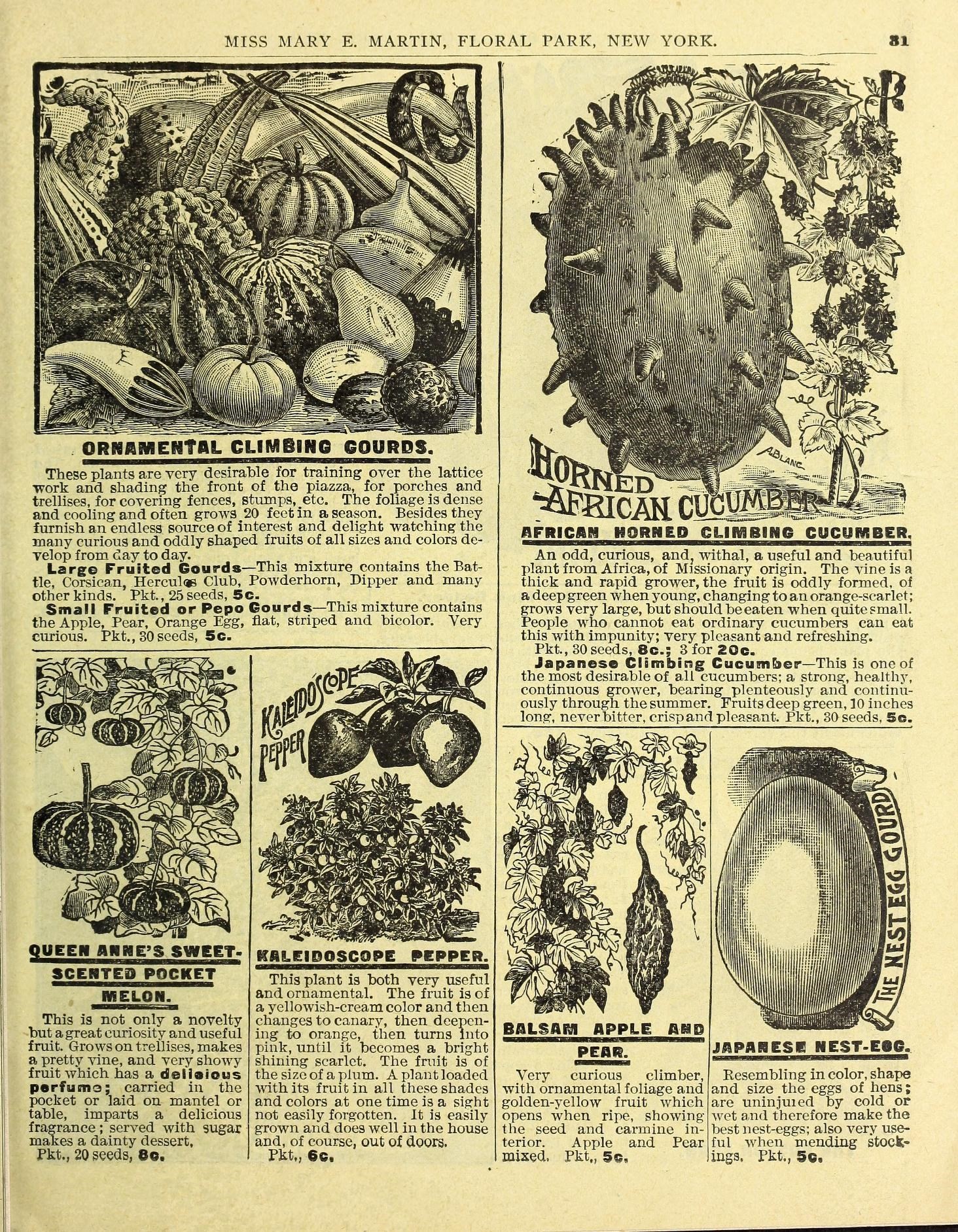
‘Corsican’ is a Lagenaria siceraria landrace selected for warty, ornamental, often huge fruits—same species as smooth bottle gourds, different drama. Young fruit can be eaten like summer squash; most growers chase the fully cured shell for crafts and absurd table centerpieces. Sow after soil warms; long frost-free season helps fruits size and shells harden before cold. Humidity invites the usual cucurbit leaf fungi—trellis for airflow and cleaner fruit. Sun and water: Full sun, fertile well-drained soil, steady moisture while vines run and fruit swells; ease off as shells cure on the vine. ✂️ Propagation: Direct-sow or transplant carefully; fragile roots hate rough handling. Strong trellis or you will triage mud-rot gourds.
Permaculture Functions
- Edible: Tender immature fruit in the kitchen.
- Ornamental: Sculptural fruits that outshine your minimalist phase.
- Fiber: Cured shells for containers, birdhouses, and percussion regrets.
Vertical annual biomass, food while young, craft stock when old:
Practitioner Notes
- Small striped ornamental gourds cure fast—big lagenarias need weeks; do not stack until inner rind rings hollow.
- Trellis small types for uniform shells—ground contact leaves flat pale scars buyers notice.
- Powdery mildew on oldest leaves is normal late season—remove senescing canopy to slow ladder climb to meristem.
- Isolate from heavy cucurbit plantings if virus vectors are hot—shared aphid flights are not your friend.
Companion Planting
- Corn
- Beans
- Nasturtium
- Wet stagnant air around foliage
- Planting only cucurbits in the same spot year after year
Pest Pressure