About
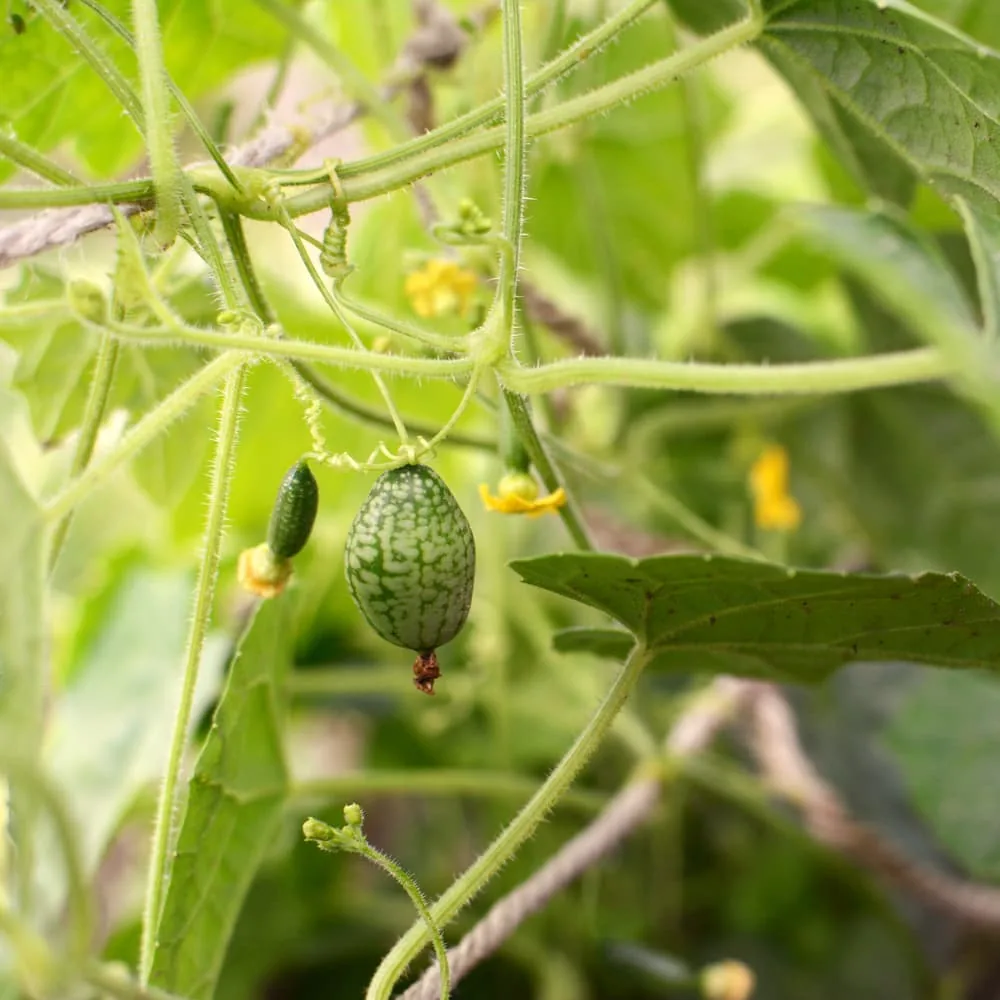
The Cucamelon (Melothria scabra) is a vigorous, climbing vine native to Mexico and Central America. It produces an abundance of small, grape-sized fruits that resemble miniature watermelons but have a cucumber-like taste with a hint of citrus. The plant features palmate leaves and delicate curling tendrils, making it suitable for trellising. It is relatively pest-resistant and drought-tolerant compared to other cucurbits. Prefers full sun exposure for optimal growth. Thrives in well-drained, humus-rich soil. Requires regular watering, approximately 2.5 cm (1 inch) per week, but is more drought-tolerant than common cucumbers. Seed: Start seeds indoors 4-6 weeks before the last frost date. Sow seeds 1.25 cm (0.5 inches) deep in seed-starting mix. Maintain a soil temperature of 24-27°C (75-80°F) for optimal germination. Transplant seedlings outdoors after the danger of frost has passed and the soil has warmed. Harvest fruits when they are approximately 2.5 cm (1 inch) long, resembling tiny watermelons. Regular harvesting encourages continuous fruit production throughout the growing season.
Permaculture Functions
- Edible: Melothria scabra fruits at grape size with cucumber-citrus bite -- eat fresh, pickle as Mexican sour gherkins, or slice into salsas when still firm.
- Wildlife Attractor: Small yellow flowers and nectar draw bees to trellised vines -- fruits are bite-sized bird snacks if you leave some clusters.
- Ground Cover: Palmately lobed leaves and twining stems shade soil along vertical trellis feet -- reducing splash on cucurbit beds.
Companion Planting