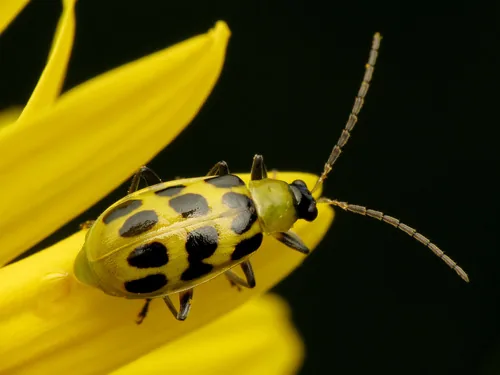
Field Identification
If leaves, stems, or fruit suddenly look spotted, sunken, or rotting, spotted cucumber beetle may already be active. This problem often starts small, then spreads across healthy tissue before most growers realize how serious it is. Warmth, moisture, and crowded foliage usually speed it up. Treat early, because waiting even a few days can turn a manageable infection into major crop loss.
Look for a pattern, not one bad leaf: expanding spots, dark or pale halos, fuzzy growth, or tissue that collapses when touched. Check both leaf surfaces, stem bases, and fruit scars where symptoms first appear. New lesions after rain, overhead watering, or heavy dew are a strong clue. When separate spots begin merging into larger dead patches, the disease is advancing quickly.
Not sure what you have? Use the symptom diagnosis tool →
How to Deal With It
Organic Control Methods
Ground beetles are the most important predator of cucumber beetle larvae in soil — permanent ground cover, mulch, and undisturbed soil edges near beds support their populations year-round. Soldier beetles eat adult cucumber beetles and are attracted talcid wasps parasitize larvae — plant dill, fennel, and sweet alyssum to attract them. Beneficial nematodes (Heterorhabditis bacteriophora) applied to moist soil in spring target larvae before they damage roots — apply when soil is above 60F (15C).
Cucumber beetles spread bacterial wilt disease as they feed — a single beetle can infect a plant in one visit, and there is no cure once infected. Prevention matters more than control. Row covers from transplant until flowering completely exclude beetles during the most vulnerable period. Use transplants rather than direct seed — larger plants tolerate beetle feeding better and you gain 3-4 weeks of protection under cover. Check plants daily in early summer: adult beetles overwinter in field edges and emerge hungry when cucurbits are just getting established.
Blue Hubbard squash is a powerful trap crop — cucumber beetles strongly prefer it over all other cucurbits. Plant a few at bed edges, allow beetles to concentrate there, then destroy the trap crop plants with beetles on them. Delay transplanting 2-3 weeks later than normal using row covers — beetle pressure drops significantly after the early-season emergence peak. Interplant with radishes, nasturtiums, and catnip which have demonstrated repellent effects on cucumber beetles. Rotate cucurbit beds at least 100 feet from previous year locations.
Row covers are the most effective mechanical control — bury edges daily to prevent beetles from crawling under. Remove at first female flower for pollination. Sticky yellow traps at plant height monitor adult populations — when you catch more than 5 per trap per week, beetles are establishing. Vacuuming plants in early morning when beetles are sluggish works well in small gardens. Beetles drop to the ground when disturbed — shake plants over a sheet and collect them.
Kaolin clay is the most effective spray option — it creates a physical barrier on leaf surfaces that deters feeding and egg-laying without harming beneficials. Apply every 7 days and after rain, coating new growth thoroughly. Neem oil disrupts beetle feeding behavior and egg-laying — apply weekly as prevention. Pyrethrin provides quick knockdown but degrades in hours, harms all insects including beneficials, and should be a last resort only. Apply at dusk, never near open flowers. Spinosad is effective on larvae and less harmful to beneficials than pyrethrin — apply as soil drench to target root-feeding larvae.
Let Nature Handle It
Natural Enemies
- Ground beetles
- Soldier beetles
- Spiders
Threat Map