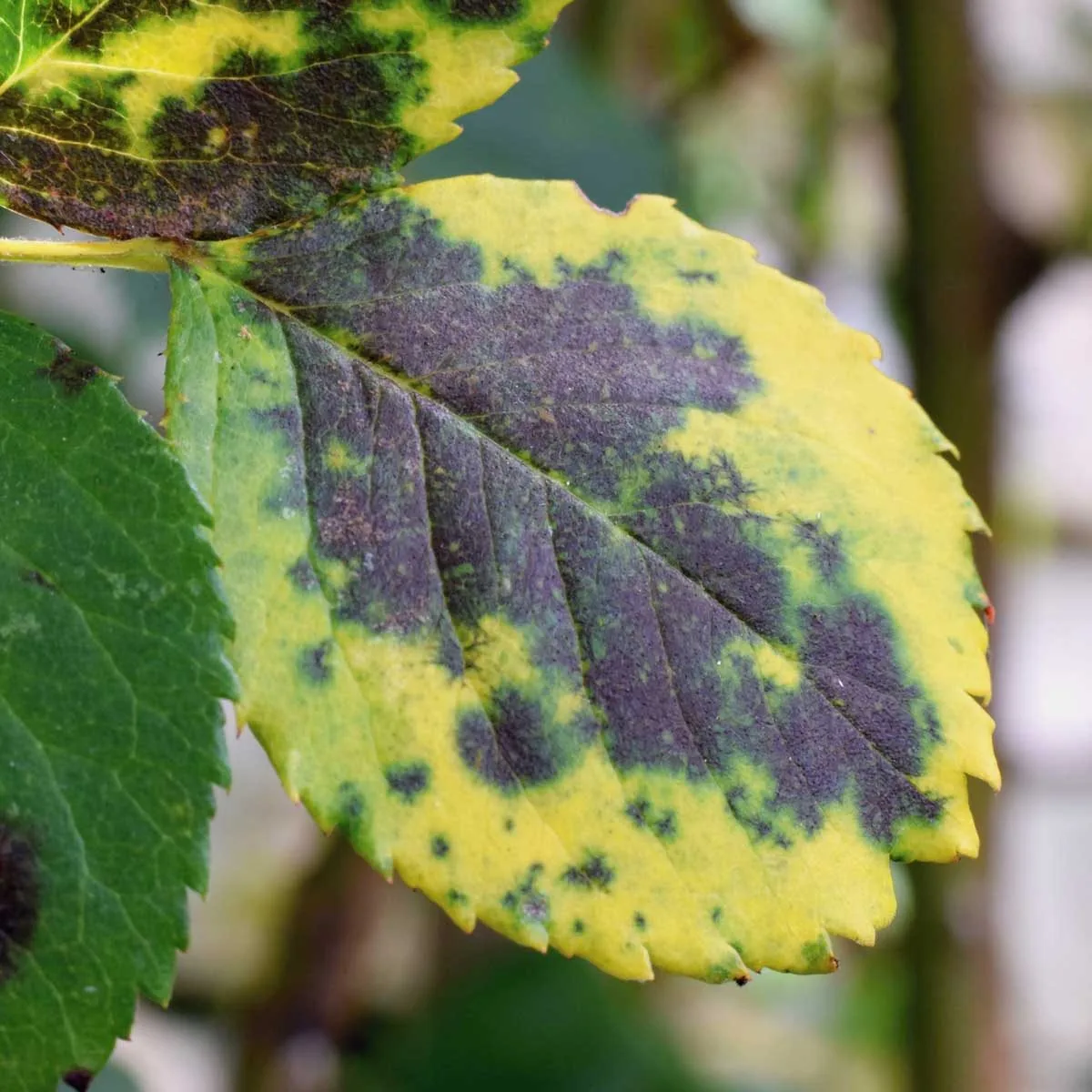
Field Identification
If leaves, stems, or fruit suddenly look spotted, sunken, or rotting, leaf blight may already be active. This problem often starts small, then spreads across healthy tissue before most growers realize how serious it is. Warmth, moisture, and crowded foliage usually speed it up. Treat early, because waiting even a few days can turn a manageable infection into major crop loss.
Look for a pattern, not one bad leaf: expanding spots, dark or pale halos, fuzzy growth, or tissue that collapses when touched. Check both leaf surfaces, stem bases, and fruit scars where symptoms first appear. New lesions after rain, overhead watering, or heavy dew are a strong clue. When separate spots begin merging into larger dead patches, the disease is advancing quickly.
Not sure what you have? Use the symptom diagnosis tool →
How to Deal With It
Organic Control Methods
Bacillus subtilis and B. amyloliquefaciens colonize leaf surfaces and produce antifungal and antibacterial compounds that suppress leaf blight pathogens -- apply preventively as foliar sprays every 7-14 days during wet weather. Trichoderma as a soil drench supports root health and reduces systemic stress that makes plants more susceptible to foliar disease. A diverse phyllosphere microbial community naturally suppresses blight -- avoid sterilizing copper sprays that eliminate competing beneficial organisms on leaf surfaces.
Leaf blight covers several distinct diseases -- identify whether you are dealing with a fungal blight (Alternaria, Phytophthora, Botrytis) or bacterial blight (Pseudomonas, Xanthomonas) because controls differ. Fungal blights spread by rain splash and require wet leaves to infect. Bacterial blights spread faster in warm wet weather and through wounds. In both cases, water at the soil line only -- never overhead irrigation. Mulch under plants prevents soil splash onto lower leaves. Scout after rainstorms when infection conditions peak.
Remove and bag infected leaves and plant parts immediately -- never compost as blight pathogens survive in plant debris and reinfect the following season. Widen plant spacing for air circulation -- leaves that dry quickly after rain or irrigation are far less susceptible. Prune lower leaves that touch soil where splash inoculum originates. Rotate susceptible crops on 3-4 year cycles. Choose resistant varieties where available -- modern breeding has produced blight-resistant tomatoes, potatoes, and many other crops.
Remove infected leaves at first sign and bag immediately -- blight spreads by airborne spores or rain splash and removing infected material reduces inoculum. Sanitize pruning tools between plants with 70% isopropyl alcohol when cutting through infected tissue. This is especially important for bacterial blights which spread rapidly on dirty tools.
Copper fungicides on a protectant schedule during wet periods are the most effective organic spray for both fungal and bacterial blights -- apply before infection rather than after symptoms appear. Copper has 7-10 day residual and must be reapplied after rain. Bacillus subtilis (Serenade) provides biological suppression and can be rotated with copper to reduce resistance risk and copper accumulation in soil. Neem oil has some preventive efficacy against fungal blights. Potassium bicarbonate kills fungal spores on contact -- most effective as a curative spray on early infections.
Let Nature Handle It
Natural Enemies
- Antagonistic Fungi
- Beneficial Bacteria
Threat Map