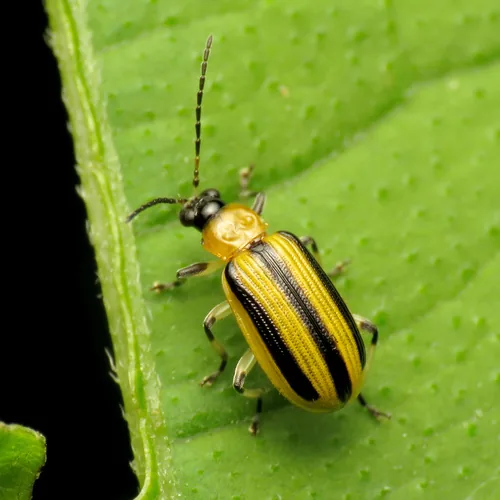
Field Identification
If new growth is curling, yellowing, sticky, or chewed, striped cucumber beetle may already be on the plant. This pest often builds quietly, then damage appears all at once. Feeding stress weakens growth, reduces yield, and opens the door to secondary disease. Early cleanup is much easier than fighting a full population surge later.
Inspect the newest growth first: leaf undersides, flower buds, stem joints, and tender tips where pests gather. Look for body shape, color, eggs, cast skins, honeydew, webbing, or fresh puncture marks. A hand lens and a white paper tap test help reveal small life stages. Matching visible pests with fresh plant damage confirms active infestation.
Not sure what you have? Use the symptom diagnosis tool →
How to Deal With It
Organic Control Methods
Ground beetles and tachinid flies are the primary natural enemies — support them with permanent mulch, diverse plantings, and minimal pesticide use. Beneficial nematodes (Heterorhabditis bacteriophora) target larvae in soil — apply in spring when soil reaches 60F (15C). Like the banded cucumber beetle, the striped cucumber beetle vectors bacterial wilt disease — one infected beetle can destroy a plant in days. Parasitic wasps attack eggs and larvae — attract them with dill, fennel, and sweet alyssum flowers at bed edges.
Striped cucumber beetles are specialists on cucurbits and are the primary vector of bacterial wilt (Erwinia tracheiphila) — there is no cure for infected plants. Row covers from transplant until first female flower are the most important prevention. Adults overwinter in field debris and wood edges — emerge hungry when cucurbits are just germinating or transplanted. Use transplants rather than direct seed to get larger plants established before beetle pressure peaks.
Blue Hubbard squash is a powerful trap crop — striped cucumber beetles strongly prefer it over all other cucurbits. Plant several at bed edges, allow beetles to concentrate, then destroy. Rotate cucurbit beds 100+ feet from previous year locations. Interplant with radishes, nasturtiums, and tansy — all have deterrent effects on cucumber beetles specifically. Remove crop debris immediately after harvest to eliminate overwintering sites.
Row covers until pollination are the most effective physical control — bury edges to prevent beetles crawling under. Remove for pollination then replace if possible. Yellow sticky traps monitor adult pressure. Shake plants over a sheet in early morning to collect sluggish beetles. Hand-pick and destroy egg clusters found in soil near stem bases.
Kaolin clay applied every 7 days deters feeding and egg-laying — the most effective and bee-safe spray option. Neem oil weekly disrupts beetle behavior and reduces egg-laying in treated soil. Spinosad as soil drench targets larvae in spring. Pyrethrin provides emergency knockdown of adults but degrades in hours, harms all insects, and should only be used at dusk as a last resort for overwhelming infestations before plants are lost.
Let Nature Handle It
Natural Enemies
- Tachinid flies
- Ground beetles
- Predatory bugs
Threat Map