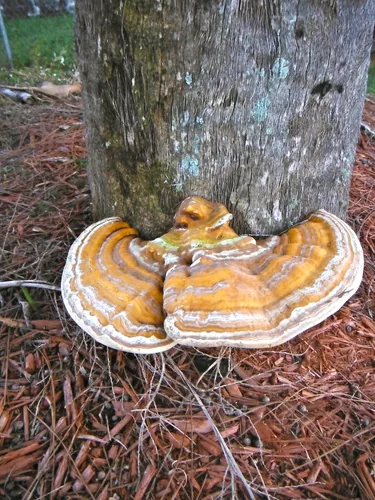
Field Identification
If leaves, stems, or fruit suddenly look spotted, sunken, or rotting, ganoderma butt rot may already be active. This problem often starts small, then spreads across healthy tissue before most growers realize how serious it is. Warmth, moisture, and crowded foliage usually speed it up. Treat early, because waiting even a few days can turn a manageable infection into major crop loss.
Look for a pattern, not one bad leaf: expanding spots, dark or pale halos, fuzzy growth, or tissue that collapses when touched. Check both leaf surfaces, stem bases, and fruit scars where symptoms first appear. New lesions after rain, overhead watering, or heavy dew are a strong clue. When separate spots begin merging into larger dead patches, the disease is advancing quickly.
Not sure what you have? Use the symptom diagnosis tool →
How to Deal With It
Organic Control Methods
No effective biological control exists for Ganoderma butt rot — once the fungus is established in a tree's root system and lower trunk, the colonization is progressive and irreversible. Healthy soil food web with diverse competitive saprophytic fungi may marginally slow spread in surrounding soil but cannot save an infected tree. Focus entirely on prevention and protecting uninfected trees from spore exposure.
Ganoderma enters through wounds, root injuries, and stressed root systems. The single most important prevention is avoiding trunk wounds — never hit trunks with string trimmers or mowers, never pile soil or mulch against root flares, never injure surface roots with tillage. Stressed trees are far more susceptible — maintain consistent moisture, avoid compaction over root zones, and do not plant susceptible palms and trees on sites with poor drainage. The conk (bracket mushroom) on the trunk means the tree is already severely compromised internally.
Remove infected stumps and root balls completely — Ganoderma inoculum persists in wood debris for years and infects new plantings through root contact. Never chip infected wood for mulch. Sterilize chainsaws between trees when working in infected areas. Plant resistant species in high-risk sites — avoid replanting palms in the same hole where an infected palm was removed. Keep dee locations as Ganoderma spreads through root grafts to adjacent trees.
Cable bracing is a temporary safety measure only — it does not stop fungal progression. Arborists can excavate and air-dry lower trunks to assess infection extent but this does not cure the tree. Once a conk appears, the tree should be evaluated for removal risk by a certified arborist. Remove infected trees before they become a hazard — Ganoderma weakens structural roots, making trees prone to sudden failure in storms.
No spray cures Ganoderma butt rot. Phosphite-based products marketed for Phytophthora have no proven efficacy on Ganoderma. Trunk injection of biologicals has mixed and generally poor research support. Spend no money on spray treatments for confirmed Ganoderma — invest instead in proper removal, stump grinding below grade, and replanting with resistant species.
Let Nature Handle It
Natural Enemies
- Competitive Saprophytic Fungi
- Soil Antagonistic Microbes
Threat Map