About
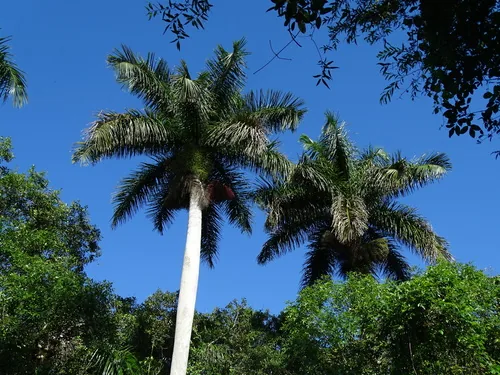
Royal palm (Roystonea regia) is a towering pinnate-leaf palm of the Caribbean and parts of Central America, instantly recognized by a smooth green shaft, swollen mid-trunk profile on many individuals, and a crown of long feathery fronds. Heights of 50–80 feet (15–24 m) are common in ideal sites, making it an avenue and park icon. In tropical permaculture it supplies high shade, vertical structure, and that undeniable “we are not in Kansas” silhouette. Full sun for straight trunks and full crowns; juveniles accept partial shade during establishment. Rich, well-drained soils with steady moisture through warm periods prevent nutrient deficiencies; drought shows on older fronds first. Avoid chronic salt spray on exposed beach lots without rinsing after storms. Sow fresh seed in warm humid conditions; germination is reliable but juveniles grow slowly at first. Transplant with root ball integrity—palms do not forgive bare-root experiments. Remove only dead fronds; never spike the green crown for aesthetics. Primarily ornamental—seeds are not a standard crop for beginners. Collect fallen fruit to reduce slippery hazards on paths. Growth flushes track year-round warmth in true tropics.
Permaculture Functions
- Ornamental: Roystonea regia lifts a smooth green crownshaft and swollen mid-trunk profile under feathery pinnate fronds that read instantly as Caribbean park architecture -- juvenile straight cylinders still telegraph future skyline scale honestly.
- Shade Provider: 15–24 m crowns cast high dappled shade over coffee seedlings, ginger beds, and farmyards without the deep gloom of broadleaf canopy -- fronds move with trades, so light patches walk across the ground all day.
- Windbreaker: Avenue spacing of tall pinnate trunks shreds steady onshore flow across Keys lots and coastal drives when crowns overlap slightly aloft -- still site away from glass roofs; falling boots of dead fronds do not negotiate.
- Wildlife Attractor: Cream panicles feed bees in warm weeks; purple-black fruit feeds pigeons and parrots where allowed -- rake sidewalks after fruit fall or slip hazards replace postcard glamour fast.
Companion Planting
- Falling fronds and fruit—site away from pedestrian skull zones and glass skylights
- Lightning attraction on open sites—tall isolated palms are not shy about storms
Threats & Pressure