About
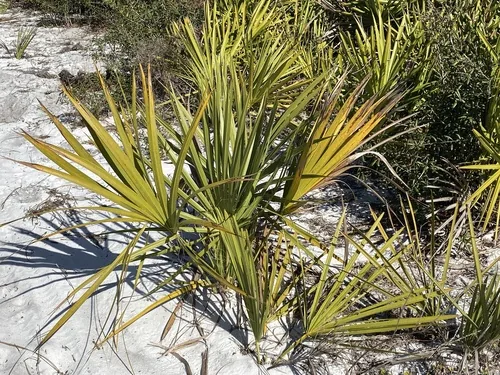
Scrub palmetto (Sabal etonia) is a fan palm of deep sandy scrub, usually with an underground or short aboveground trunk and costapalmate leaves silvery underneath. It is smaller and more clumping in habit than many landscape sabals, fitting dry, acidic sites where irrigation is absent. Use it in fire-adapted scrub restorations, xeric borders, and wildlife plantings where palmetto structure beats turf theater. Full sun for compact form and best silver leaf display; shade stretches petioles. Extremely well-drained sandy, acidic soils are native truth; tolerates drought once established. Avoid heavy clay and chronic irrigation. Sow fresh seed in warm, humid conditions; germination is slow. Transplant young palms with minimal root disturbance. Remove only fully brown fronds. Primarily ecological and ornamental—seeds feed wildlife where permitted. Growth flushes follow warm wet periods.
Permaculture Functions
- Ornamental: Sabal etonia fans flash silver leaf undersides when coastal sun strikes from the side -- shorter habit than skyline sabals so textures read human-scale along paths.
- Wildlife Attractor: Black pea-sized fruits feed rodents and birds -- while skirts of dead fronds shelter snakes and arthropods in intact scrub mosaic.
- Erosion Control: Fibrous palm roots weld deep Aeolian sand on cuts -- where blowouts start if you shave every understory species.
- Border Plant: Underground-trunk colonies trace property lines along scrub roadsides -- without shading out low wildflowers the way cabbage palms would.
Companion Planting
- Fire ecology — scrub systems may expect periodic fire; follow regulations and safety training
- Wet clay — chronic sulk and rot away from sand honesty
Threats & Pressure