About
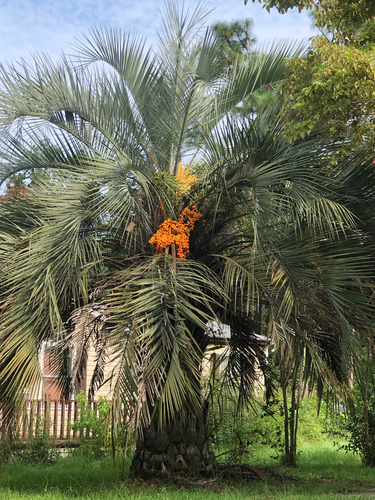
Butia capitata is the cold-toughest feather palm many subtropical growers bet on—blue-green recurving fronds, a stout trunk, and olive-sized yellow fruit that range from ‘pleasantly apricot’ to ‘fermented sock’ depending on genetics and patience. The flesh makes jelly and wine; the kernel is like a tiny coconut project. Young plants need frost protection until established; mature specimens often take brief dips into the teens °F with damage scaling with duration and humidity. Plant high and dry; wet feet rot kings. ☀️💧 Sun and Water Requirements: Full sun once established; tolerates some shade when young. Well-drained soil; drought-tolerant after establishment but fruits better with deep occasional watering in dry spells. ✂️ Propagation: From seed (slow, variable); transplant container-grown specimens—field-dug palms sulk for years. 🌾 Harvest / Best Use Timing: Gather fallen or picked fruit when flesh aroma peaks for jelly, wine, and nibbling—flavor ranges from pleasantly apricot to challenging depending on genetics and patience.
Permaculture Functions
- Edible: Pulp for jelly, wine, and adventurous nibbling; seeds for the stubborn.
- Ornamental: Formal to feral depending on pruning choices.
- Windbreaker: Tough fronds and trunk for coastal and exposed sites.
- Wildlife Attractor: Fruit for birds and mammals you may or may not have invited.
Practitioner Notes
- Pindo fruit drops messy when ripe—plant away from pavement you care about or plan weekly pickup before fermentation reeks.
- Seed takes months to sprout—warm moist baggie method beats abandoning pots that look empty for a season.
- Cold tolerance is real but not magic—wet crown freeze hurts more than dry air at 15°F (-9°C) for brief hours.
- Weevil watch starts with crown holes and chewed emerging spears—early systemic protocols are jurisdiction-specific; learn local rules.
Companion Planting
- Seagrape
- Moringa
- Pawpaw
- Poor drainage and standing water
- Deep shade (weak growth, fewer fruit)
Pest Pressure